Back
Back
CE / CME
Looking Beyond A1C in T2D Care: Cardiovascular and Kidney Risk Assessment
Physician Assistants/Physician Associates: 0.50 AAPA Category 1 CME credit
ABIM MOC: maximum of 0.50 Medical Knowledge MOC point
Physicians: maximum of 0.50 AMA PRA Category 1 Credit™
Nurse Practitioners/Nurses: 0.50 Nursing contact hour
Released: August 10, 2026
Expiration: August 09, 2027

Activity
Moving Beyond A1C: Matching Therapy to Patient Risk
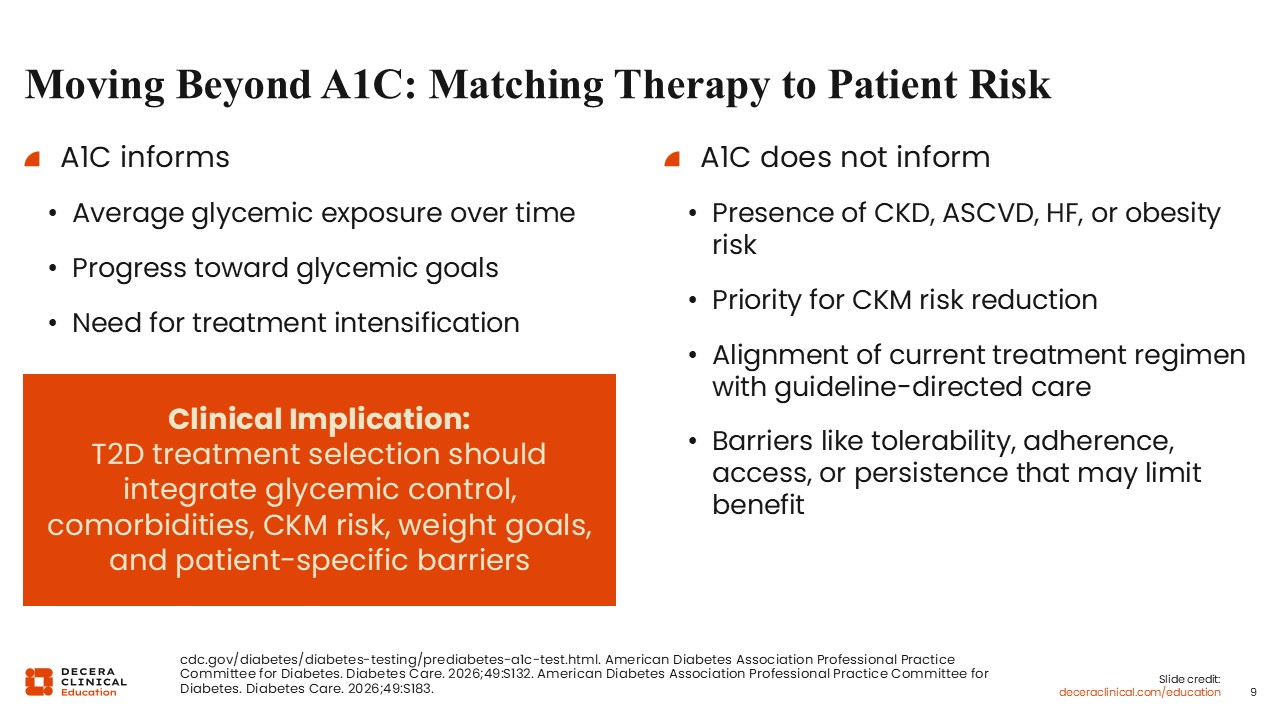
A1C remains an important measure of one’s average glycemic control over approximately 2-3 months. It also helps HCPs evaluate patients’ progress toward their individualized goals and can identify when glucose-lowering treatment needs to be adjusted. However, A1C only provides 1 component of the information needed to guide comprehensive T2D care.1,2
A1C alone does not establish whether patients have CKD, ASCVD, HF, obesity, or other CKM risk factors. Nor does it indicate if patients’ current treatment plan requires therapies for CV or kidney risk reduction. Of course, A1C also does not address the practical aspects of T2D management, including treatment tolerability or burden, adherence, affordability, and accessibility, all of which must be reassessed with patients regularly.
This is why treatment selection for T2D management should extend beyond the achievement of a glycemic target alone. Rather, primary care HCPs should integrate glycemic status within CV and kidney risk, weight-related goals, comorbidities, treatment burden, access, and patient preferences when developing an individualized, comprehensive management plan.2,3
2026 CKM Risk Stratification: T2D and Primary Care Focus
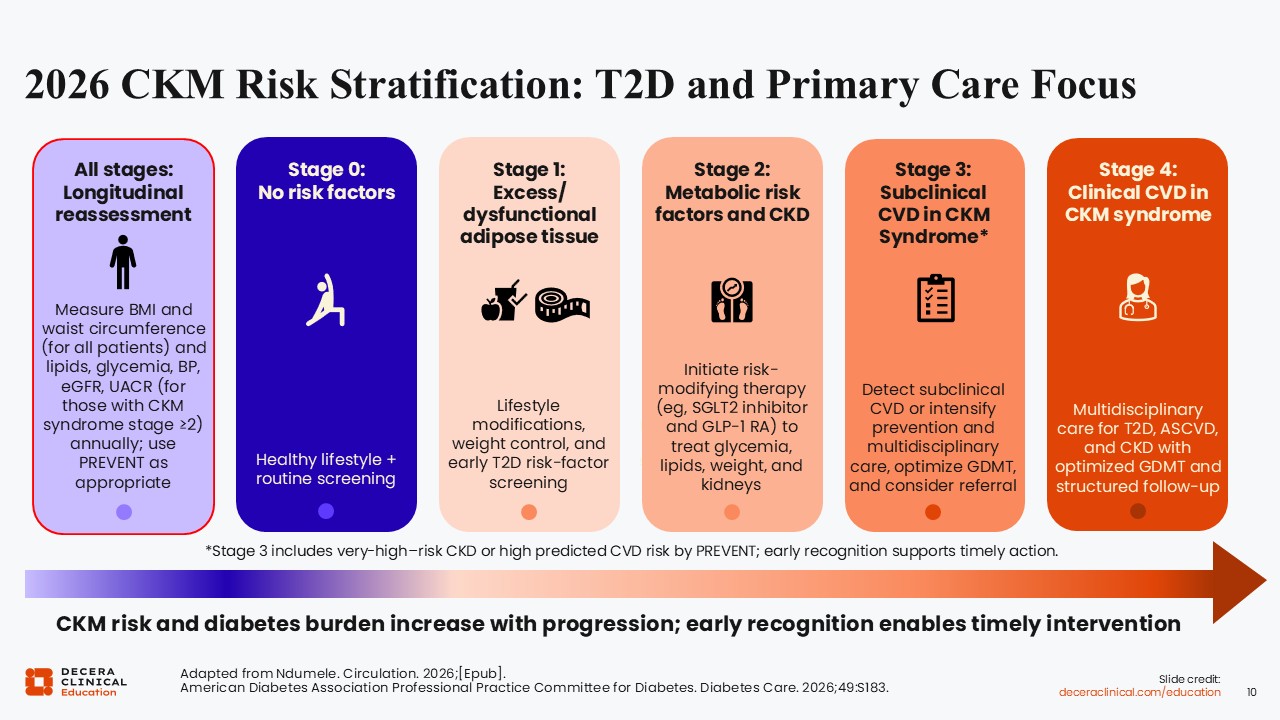
The CKM framework provides a structured approach for recognizing progressive risk throughout a patient’s lifespan. The 5 stages of CKM syndrome range from having no risk factors to having established clinical cardiovascular disease (CVD), with increased burden and risk as one’s disease progresses.
Stage 0 comprises those without any risk factors. In these patients, healthy lifestyle behaviors and routine screening are the priority. When patients develop excess or dysfunctional adipose tissue, they are considered to have stage 1 disease. This is where early attention is needed for implementing lifestyle modifications, weight management, and metabolic risk factor screening.
Stage 2 includes those with metabolic risk factors and/or CKD. Risk-modifying treatment that targets BP, lipids, glycemia, weight, and kidney protection may be warranted. Depending on patients’ clinical profile, their treatment plan might include a sodium-glucose cotransporter-2 (SGLT2) inhibitor, GLP-1 receptor agonist (RA), or other guideline-directed therapy.3
Patients with subclinical CVD, very high–risk CKD, or high predicted CVD risk by PREVENT make up stage 3 disease. At this stage, HCPs should be prompted to intensify prevention by optimizing guideline-directed medical therapy (GDMT) and consider multidisciplinary care with appropriate referrals.
Finally, stage 4 includes those with clinical CVD in CKM syndrome and generally requires coordinated management of CV, kidney, and metabolic conditions across specialties.
Regardless of which stage patients are at, risk assessment is considered longitudinal. That means HCPs should routinely evaluate patients’ BMI, waist circumference, BP, lipids, glycemia, and kidney function at guideline-recommended intervals and use PREVENT when applicable.4
Glucose-Lowering Therapy + Cardiovascular Risk Reduction
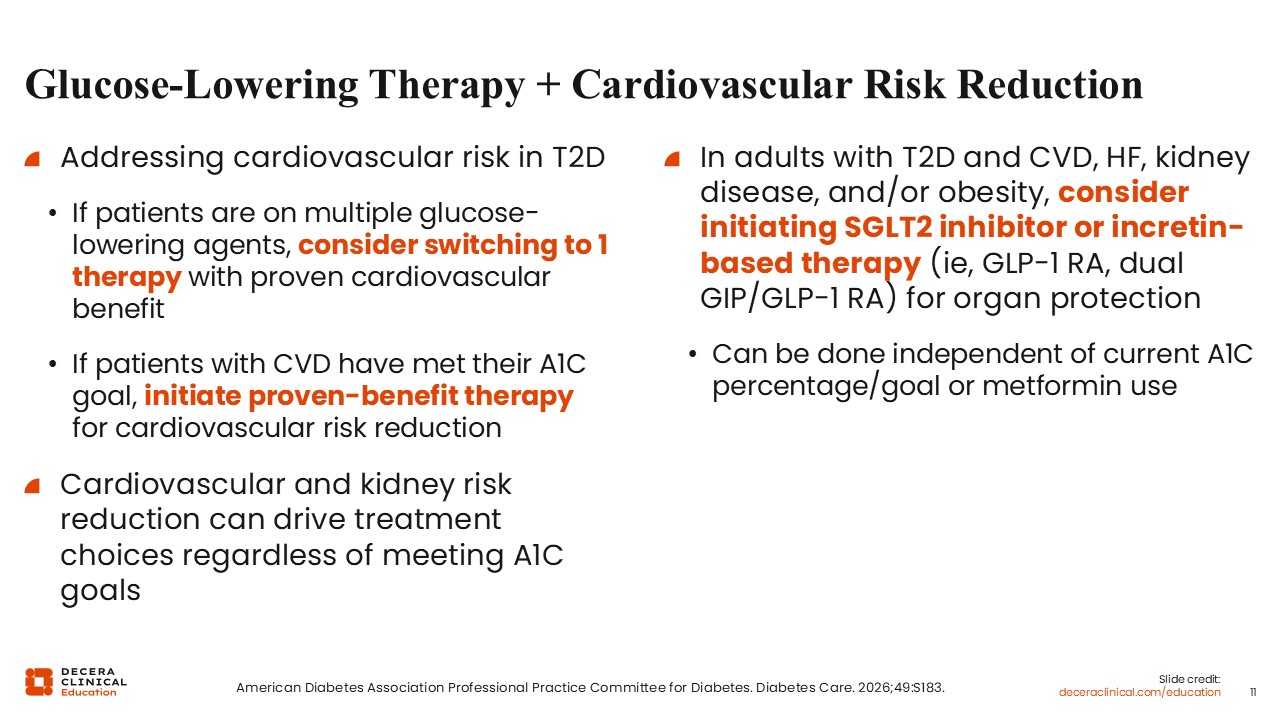
Having high CV risk, established ASCVD, HF, CKD, or obesity can change treatment priorities even when patients with T2D reach their individualized A1C goal.
Patients taking several glucose-lowering therapies without proven CV–kidney benefit may be candidates for incorporating or substituting a proven benefit therapy when clinically appropriate. For example, an incretin-based therapy (ie, GLP-1 RA, dual GIP/GLP-1 RA) or SGLT2 inhibitor with demonstrated benefit should be incorporated into treatment plans for adults with T2D and established ASCVD or high CV risk. In those with comorbid HF or CKD, an SGLT2 inhibitor is generally preferred. Then there are relevant obesity and weight management goals that may favor the addition of an incretin-based therapy with appropriate efficacy. However, weight-related efficacy should not be presented to patients as equivalent to CV or kidney benefit.
Regardless of patients’ clinical profile, these treatment decisions based on CV and kidney risk reduction should be made independent of patients’ current A1C level or metformin use. Furthermore, this should not be postponed until patients’ glycemic control worsens in any case.3
Identifying Key Risk Factors That Influence Treatment Decisions
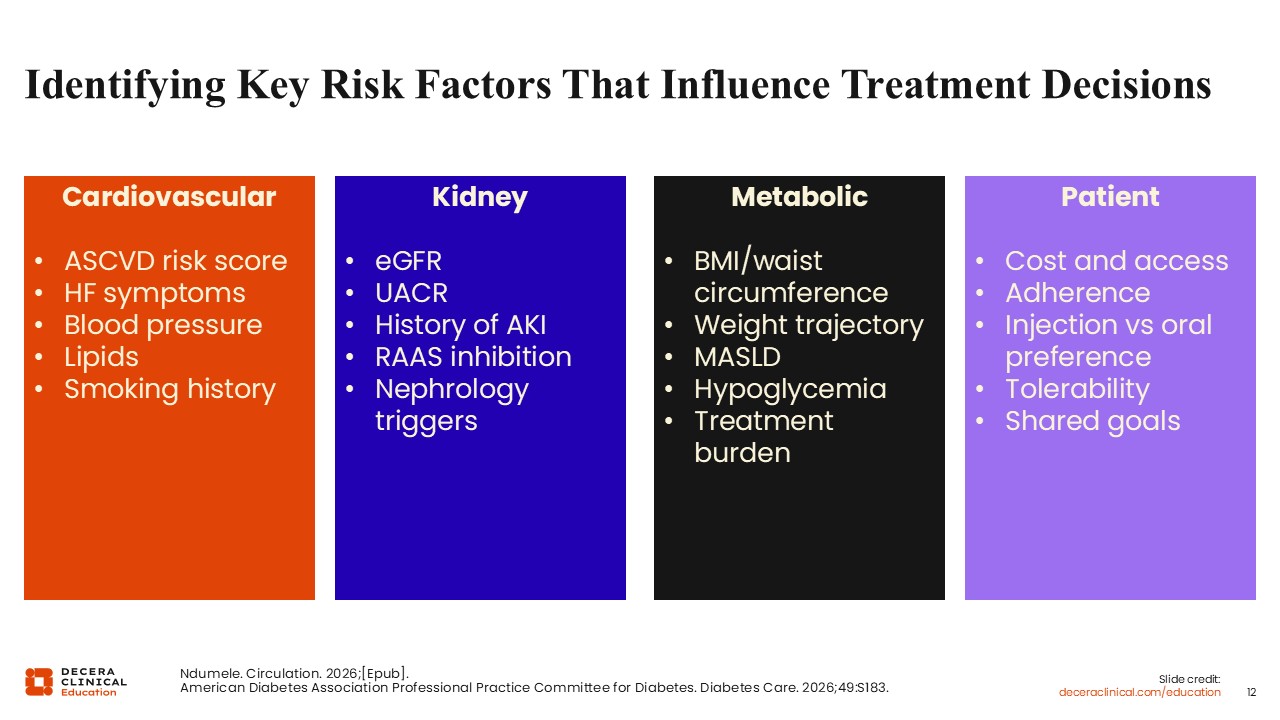
Comprehensive treatment selection requires HCPs to consider several patient-specific factors and to evaluate patients across several domains, including CV, kidney, and metabolic health.
For example, CV assessment generally asks HCPs to complete an ASCVD risk score; determine the presence or absence of HF symptoms; monitor BP and lipids; and take a history on smoking status. Kidney assessment often comprises eGFR and UACR measurements to stage CKD, history of acute kidney injury, use of renin–angiotensin–aldosterone system (RAAS) inhibition, potassium level monitoring, and referral triggers to nephrology.
It is important to understand that metabolic assessment extends beyond A1C, too. It should also comprise BMI and waist circumference, weight trajectory, presence of metabolic dysfunction–associated steatotic liver disease, hypoglycemia risk, and treatment burden.
Finally, patient-specific factors to address include patients’ ability to afford and access treatment, adherence, preferences (ie, injection vs pill), tolerability, and overall health goals. This is where shared decision-making plays a critical role in comprehensive T2D management.3,4
Risk Stratification in Routine Primary Care
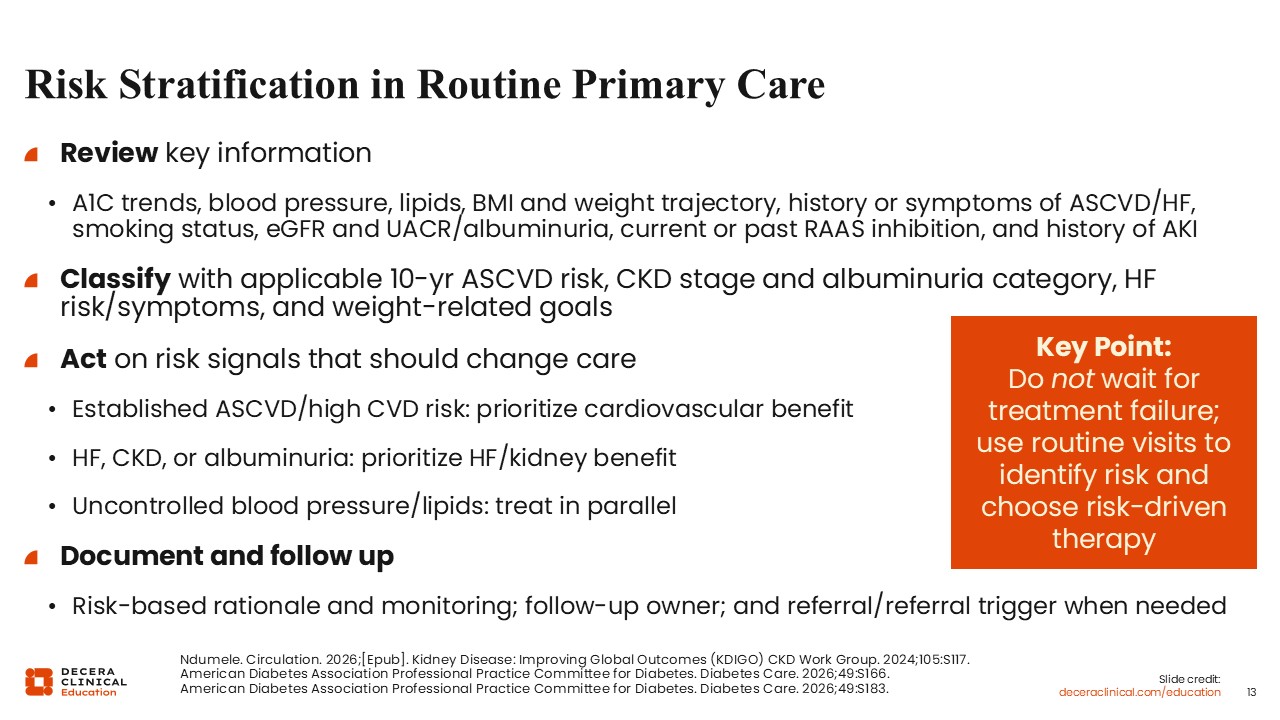
To stratify CKM risk effectively, primary care HCPs must continually review key information collected during routine visits with patients. This includes A1C trends, BP and lipid levels, BMI and weight trajectory, smoking status, history or risk of ASCVD or HF, kidney function (eg, eGFR, UACR, and prior acute kidney injury), and the current treatment plan.
Risk should be classified using tools applicable to each patient, such as CKM and CKD staging, PREVENT estimation, albuminuria categorization, HF status, and presence of weight-related comorbidities or relevant goals. Established ASCVD or high CV risk should prompt HCPs to initiate therapies with demonstrated CV benefit for patients. The presence of HF, CKD, or albuminuria should trigger HCPs to use therapies with proven HF or kidney benefit. Although hypertension and dyslipidemia can be treated in parallel, HCPs must avoid clinical inertia and not wait for treatment failure to occur before adjusting therapies.
When assessing risk and making changes to treatment plans, all should be documented and reviewed in follow-up. Documentation should include your risk-based rationale, monitoring schedule, follow-up plan, and referral triggers.3-6
Aligning Patient Assessment With Guideline-Directed Care
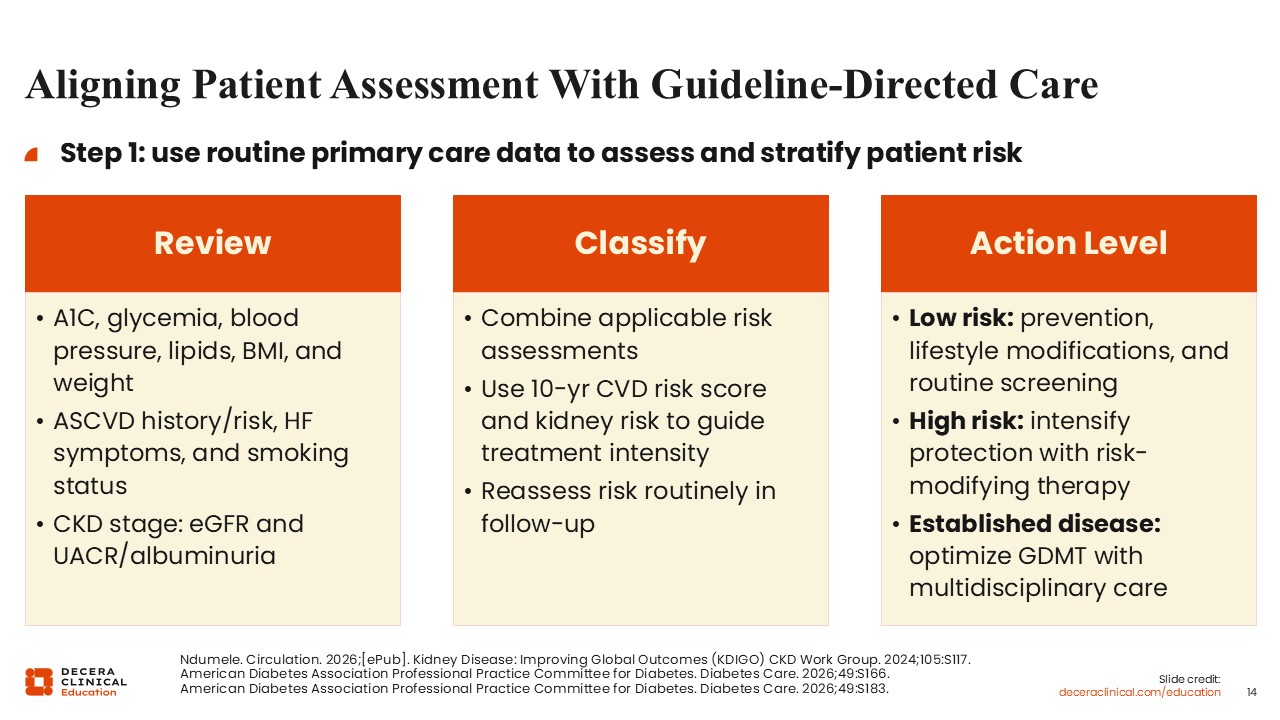
The first step in aligning T2D care with current guideline recommendations is to use routine clinical information to assess and stratify patients’ overall CKM risk.
Review their A1C and other glycemic measures alongside their BP, lipids, BMI, and weight trajectory. Evaluate patients for established ASCVD, predicted CV risk, HF symptoms, and smoking status. Then perform the kidney assessment by including both eGFR and UACR. All of this should be done at least annually in adults with T2D but can occur more frequently in those with established CKD.
Next, HCPs should combine their findings into a practical CKM risk assessment. Use PREVENT when applicable and classify CKD using both eGFR and UACR measurements. Risk should then be re-evaluated longitudinally because patients’ disease status and treatment needs may change over time.
In terms of action to take, patients at lower CKM risk often require prevention, lifestyle modifications, and routine surveillance. Whereas those at higher risk or with established disease generally require risk-modifying therapy with optimized GDMT and multidisciplinary management.3,4,6
Aligning Patient Assessment With Guideline-Directed Care
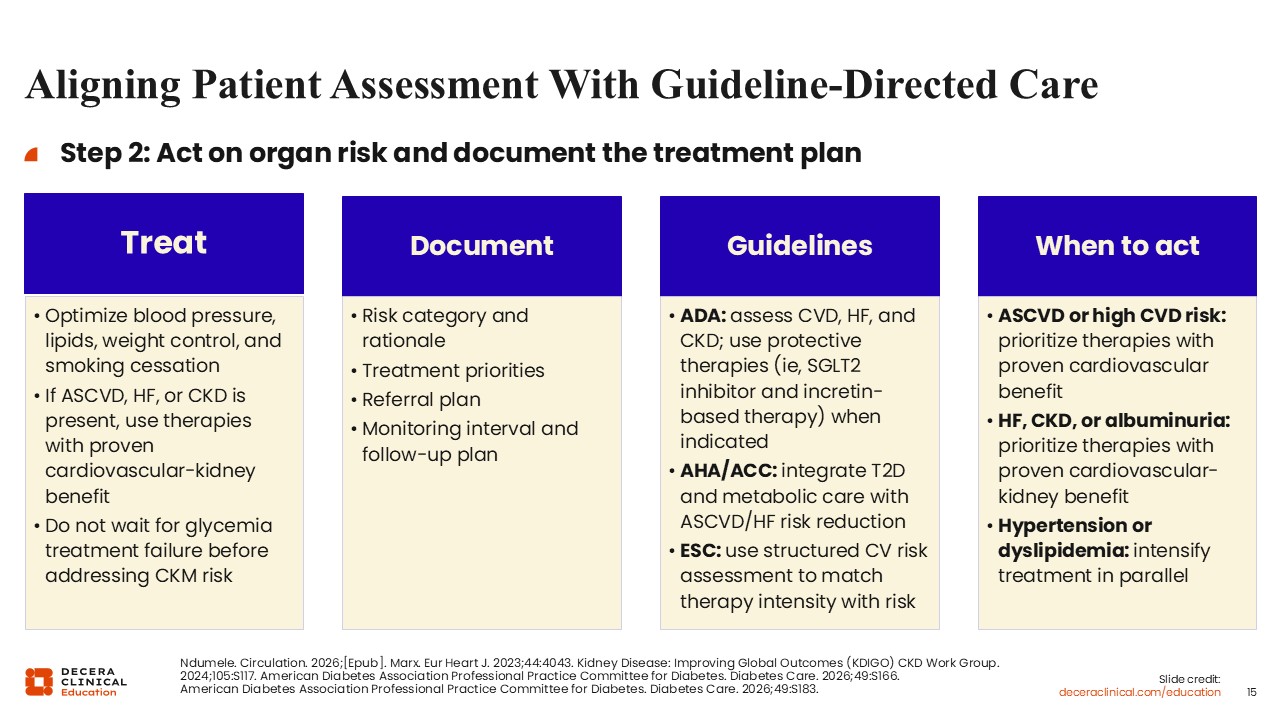
After HCPs have determined patients’ CKM risk, the next step is to act on the identified organ-specific risk and document the treatment plan.
In general, treatment should address patients’ full CKM profile, including BP, lipids, need for smoking cessation or weight management, glycemia, CVD, HF, and CKD. HCPs should prioritize therapies with demonstrated CV benefit in patients with T2D and comorbid ASCVD or high CV risk. When both HF and CKD are present, HCPs must initiate therapies with demonstrated HF and kidney benefit, particularly an SGLT2 inhibitor when appropriate. An incretin-based therapy with proven CV benefit may be added or selected when ASCVD risk reduction and/or weight management is a priority for patients.
These therapies should not be reserved only for patients whose A1C remains above goal. The treatment plan must document patients' risk and your therapeutic rationale, intended monitoring intervals, follow-up responsibilities, and criteria for referral.4-7
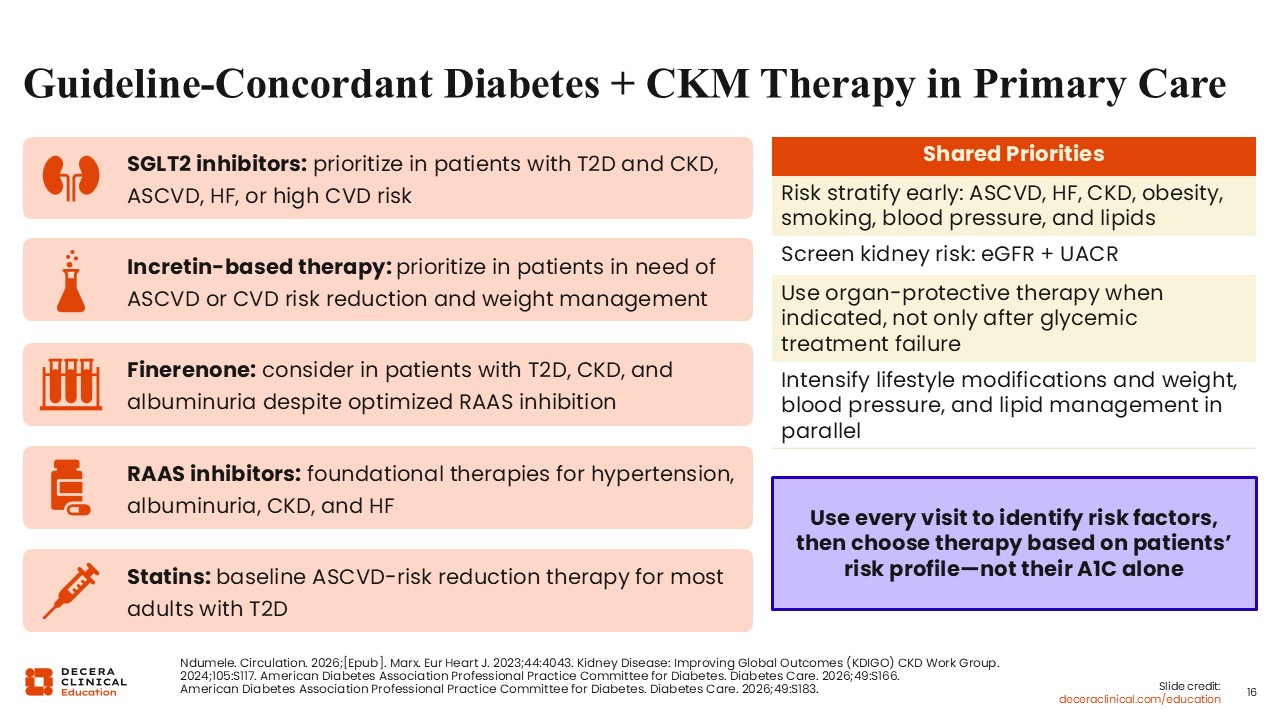
Guideline-Concordant Diabetes + CKM Therapy in Primary Care
Current guidelines support early assessment of ASCVD, HF, CKD, obesity, smoking status, BP, lipids, and kidney function using both eGFR and UACR. They also recommend the use of organ-protective therapy when indicated rather than waiting for glycemic treatment failure.
More specifically, RAAS inhibition with an ACE inhibitor or ARB is recommended for many patients with T2D and hypertension or CKD and moderate to severe albuminuria, particularly when their UACR is 30 mg/g or higher. GDMT for HF should be selected according to patients’ specific phenotype, rather than prescribed generically as RAAS inhibition.
Statin therapy is recommended for most adults with T2D, according to their age and CV risk, and finerenone may be considered in eligible patients with T2D, CKD, and persistent albuminuria despite maximally tolerated RAAS inhibition.
SGLT2 inhibitors should be prioritized when ASCVD, HF, or CKD protection are major treatment goals. These therapies may also provide CV benefit in appropriate patients with T2D. In turn, incretin-based therapies with demonstrated CV benefit should be prioritized when ASCVD or CVD risk reduction is necessary in the context of weight management. Furthermore, the injectable GLP-1 RA semaglutide carries relevant indications for metabolic dysfunction–associated steatohepatitis and kidney protection.8 Emerging evidence may expand the role these therapies have in producing liver and kidney benefit in patients with T2D independent of weight loss.9,10
As shown on the slide, these therapies are complementary, and treatment selection should reflect patients' combined CKM risk, glycemic goals, safety concerns, and access considerations.3-7
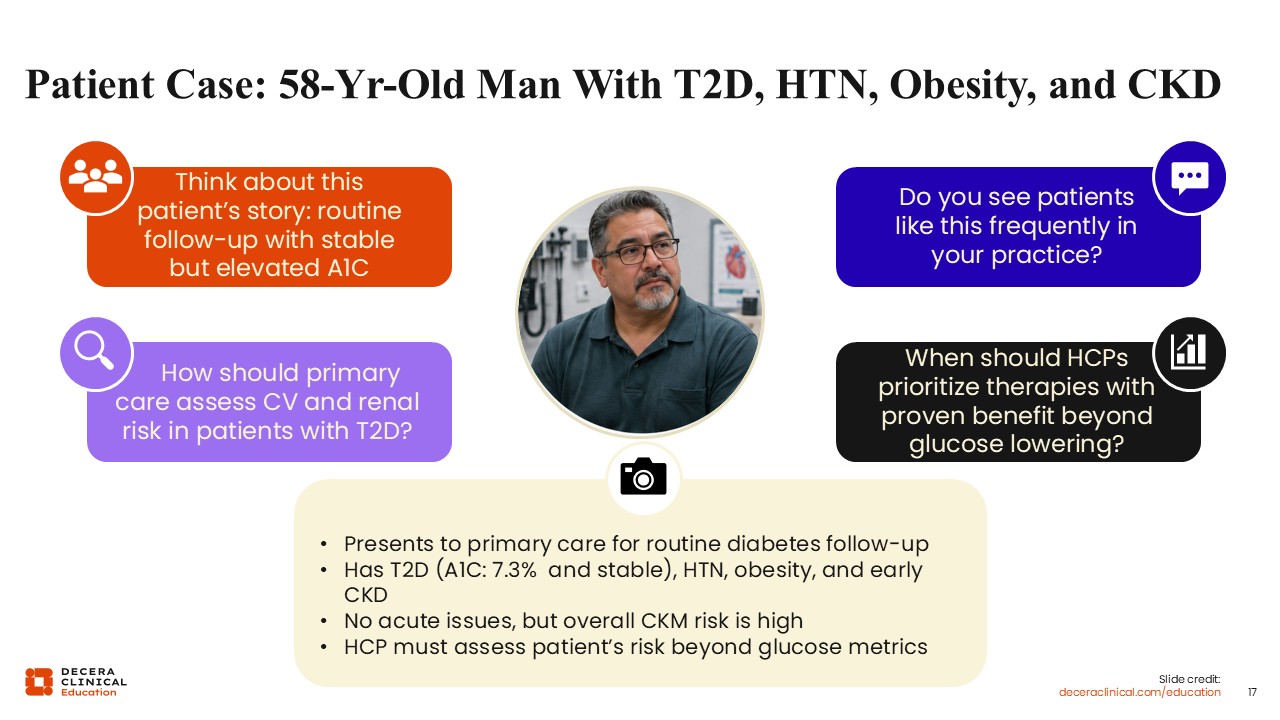
Patient Case: 58-Yr-Old Man With T2D, HTN, Obesity, and CKD
Let us now consider a patient case. The patient is a 58-year-old man who presents to primary care for routine follow-up. He has T2D, hypertension, obesity, and early CKD. His A1C is stable at 7.3%, and he reports no symptoms.
The central question is not simply whether additional glucose lowering is needed but whether the current treatment regimen adequately addresses the patient’s CKM and weight-related risks. What additional assessment should primary care complete before deciding whether and how to modify therapy?
Poll 3 Course Correction
A stable A1C alone does not indicate low CV or kidney risk.1 Rather, a guideline-aligned assessment that integrates ASCVD history or predicted risk, HF symptoms, BP, lipids, smoking status, BMI and weight trajectory, as well as kidney function and CKD staging should be completed.3,4 The key message here is: do not delay comprehensive CKM risk assessment until glycemia or kidney function worsens. This broader assessment helps primary care align treatment with the patient’s current risks, comorbidities, and individualized goals.
Poll 4 Course Correction
High CV risk or established ASCVD, HF, or CKD with albuminuria can justify the prioritization of organ-protective therapy independent of A1C stability. Obesity may also favor a therapy with meaningful weight benefit. Therefore, treatment should be driven by the patient's specific organ-risk and weight-management priorities rather than delayed until glycemic therapy fails him.4
Poll 5 Course Correction
Comprehensive CKM risk assessment should be integrated into routine follow-up for patients with T2D. At each visit, HCPs should evaluate patients’ most recent A1C, BP and lipid levels, current BMI and weight trajectory, ASCVD and HF status, kidney function, and treatment fit. eGFR and UACR should be measured at least annually for all adults with T2D and up to 4 times per year in those with established CKD, depending on their disease stage and risk of progression. Thus, the standard workflow should use every follow-up visit to review patients’ CKM risk while repeating laboratory testing at guideline-recommended intervals (not necessarily at every encounter).4
Patient Case: 58-Yr-Old Man With T2D, HTN, Obesity, and CKD
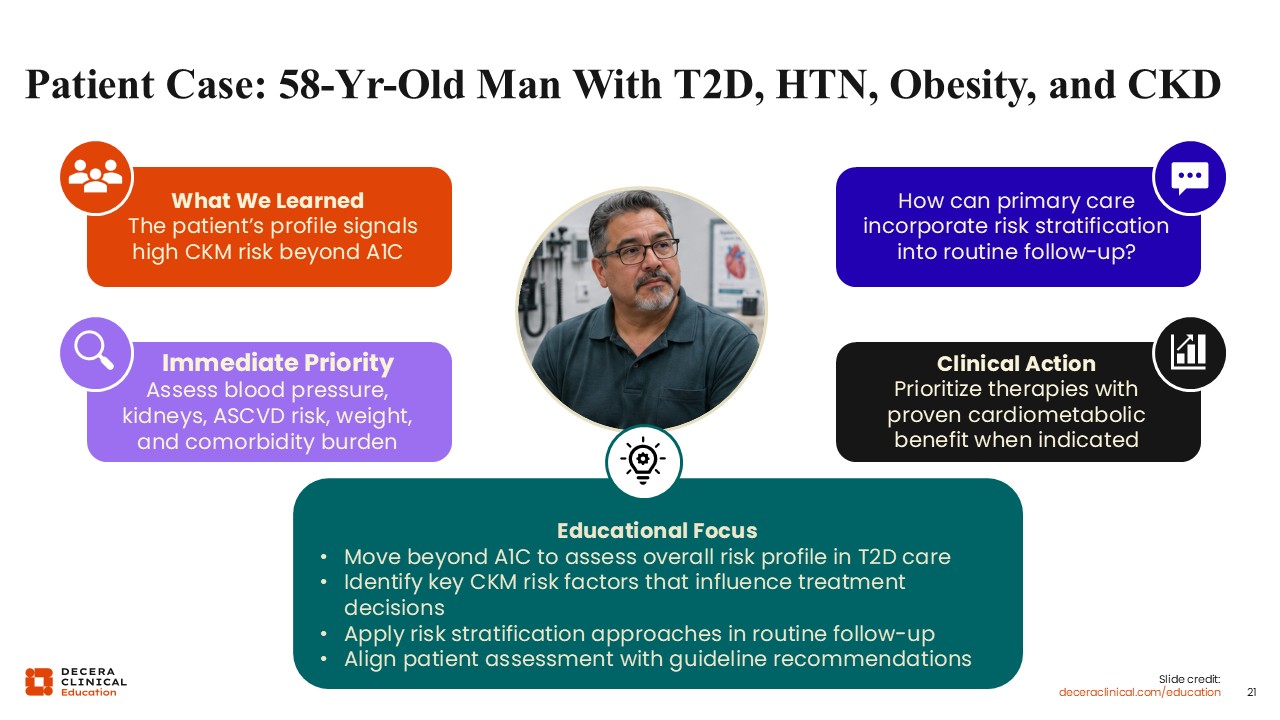
This patient's stable A1C does not adequately represent his overall health risk. The combination of T2D, hypertension, obesity, and early CKD identifies this patient as having a high CKM risk profile that warrants comprehensive, proactive management.
The immediate priority is to evaluate the patient’s overall health beyond his A1C. Treatment should then be aligned with the appropriate risks identified, including use of therapies with demonstrated CVD, HF, kidney, or weight-related benefit when appropriate.
Risk stratification is not a one-time exercise. It should be revisited during routine follow-up to identify disease progression, evaluate treatment effectiveness, address barriers, and determine whether the management or referral plan should change.