Back
Back
CE / CME
Advances in Metastatic Castration-Resistant Prostate Cancer: Biomarker-Driven Treatment Strategies and Emerging Therapeutic Approaches
ABIM MOC: maximum of 0.50 Medical Knowledge MOC point
Physicians: Maximum of 0.50 AMA PRA Category 1 Credit™
Released: July 20, 2026
Expiration: January 19, 2027

Activity
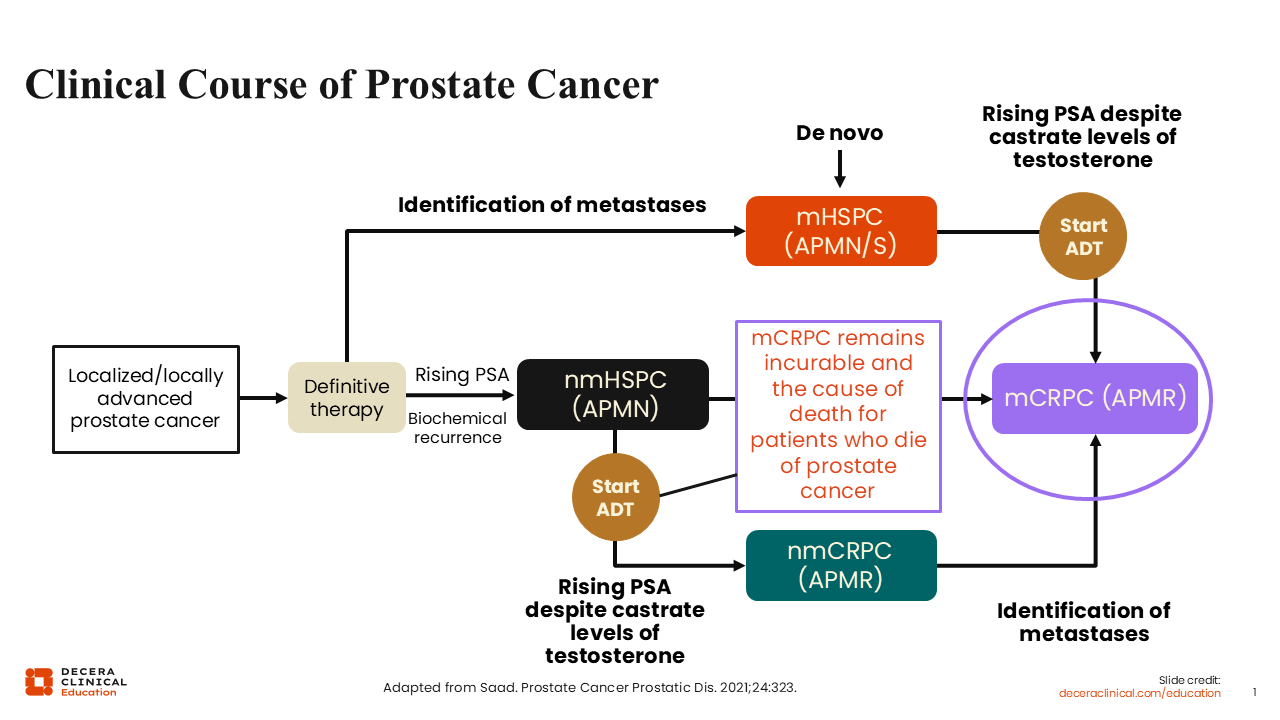
Clinical Course of Prostate Cancer
Patients with prostate cancer are often diagnosed with localized disease, although some present with metastatic disease at diagnosis. For patients with localized or locally advanced disease, definitive treatment with radical prostatectomy or radiation therapy may be curative. Selected patients may also receive focal or ablative approaches depending on disease features, local expertise, and shared decision-making.
Prostate cancer is classified into 5 grade groups at diagnosis: grade group 1 = Gleason 3+3; grade group 2 = Gleason 3+4; grade group 3 = Gleason 4+3; grade group 4 = Gleason 8; and grade group 5 = Gleason 9-10. Higher grade groups are associated with more aggressive disease and greater risk of recurrence. Many patients with grade group 1 or selected grade group 2 disease can be managed with active surveillance. In contrast, those with higher-risk features are more likely to require definitive therapy and closer monitoring.1 In patients with a rising PSA level after local therapy, prostate-specific membrane antigen (PSMA) PET imaging can help identify oligometastatic disease not detected on conventional imaging.
Some patients present with de novo mHSPC, whereas others develop recurrent mHSPC following prior definitive treatment. The terms synchronous and metachronous metastatic disease are often used to distinguish metastases present at initial diagnosis from those that develop later.
The Prostate Cancer Working Group 4 (PCWG4) recommended moving away from traditional terms and adopting new nomenclature based on androgen pathway modulation (APM), so now the terms APM-naive/sensitive (APMN/S) and -resistant (APMR) are used.2 For patients with mHSPC, whether de novo or recurrent, the foundation of treatment remains testosterone suppression with androgen deprivation therapy (ADT), usually with treatment intensification when appropriate.
Despite initial responses to ADT and treatment intensification, many patients eventually develop castration-resistant disease, defined by clinical, radiographic, or biochemical progression despite castrate testosterone levels.
Historically, patients who had a rising PSA level despite castrate testosterone levels but no detectable metastases on conventional imaging (CT or bone scan) were classified as having nonmetastatic CRPC. Patients with a PSA doubling time of less than 10 months are at particularly high risk for developing radiographically detectable metastatic disease. Under the PCWG4 framework, these disease states are more appropriately described as APMR. This module focuses on treatment strategies for patients who develop APMR prostate cancer, historically referred to as mCRPC.
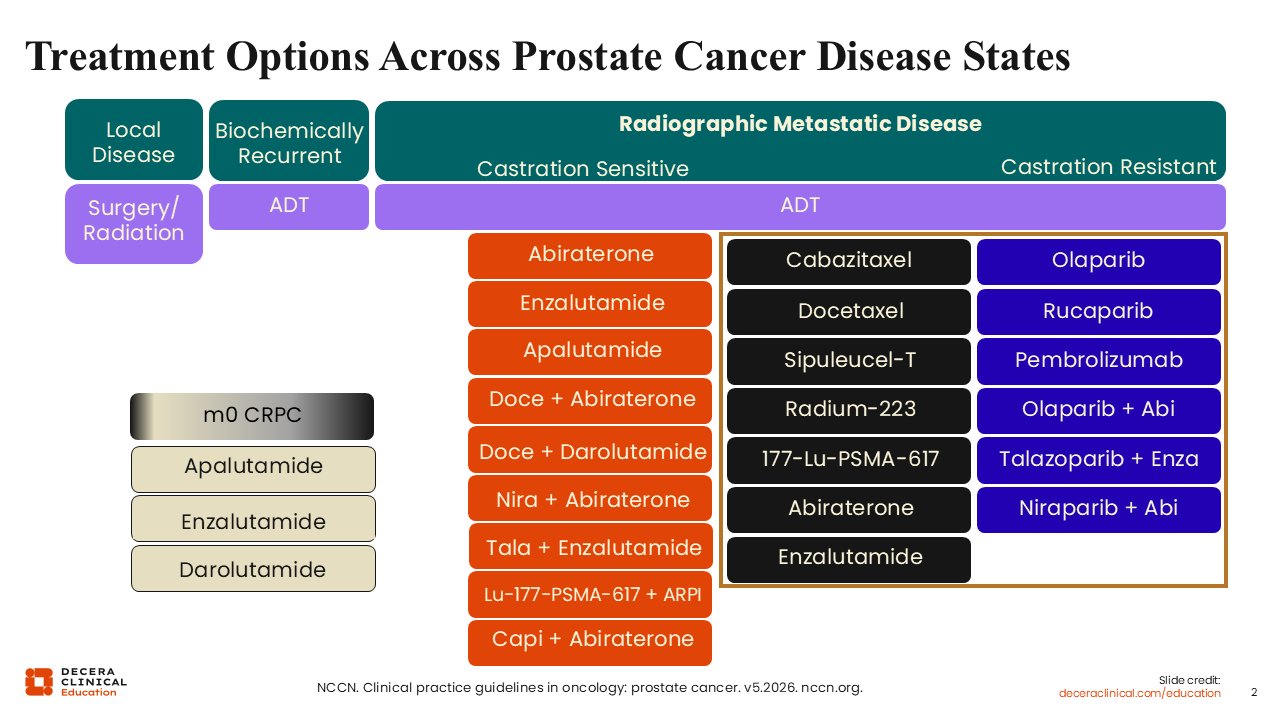
Treatment Options Across Prostate Cancer Disease States
Treatment options for prostate cancer vary by disease stage. For localized disease, surgery and radiation therapy remain standard curative approaches. In patients with biochemical recurrence after prostatectomy, salvage radiation therapy may be considered.
Treatment intensification is now standard for most patients with metastatic hormone-sensitive disease and for selected patients with high-risk recurrent disease. ADT alone is no longer sufficient for many patients; it is commonly combined with an ARPI, such as abiraterone, enzalutamide, apalutamide, or darolutamide. In selected patients, docetaxel-based triplet therapy may provide additional benefit.1
Targeted therapies are also expanding across prostate cancer disease states. For patients with homologous recombination repair (HRR) gene alterations, particularly BRCA1/2 alterations, PARP inhibitor–based therapy may be appropriate depending on the exact biomarker and disease setting. In addition, capivasertib plus abiraterone and prednisone is now approved for PTEN-deficient metastatic APM-naive/sensitive prostate cancer, previously referred to as mHSPC.3
For mCRPC, available treatments include ARPIs, taxane chemotherapy, PARP inhibitors for selected biomarker-defined patients, radiopharmaceuticals, sipuleucel-T for selected patients, and pembrolizumab for selected patients with microsatellite instability–high, mismatch repair deficient, or tumor mutational burden–high tumors.1
Although significant advances have improved outcomes, metastatic prostate cancer remains largely incurable. Treatment goals focus on prolonging survival, delaying disease progression, minimizing complications, preserving quality of life, and aligning treatment decisions with patient preferences, comorbidities, and disease characteristics.
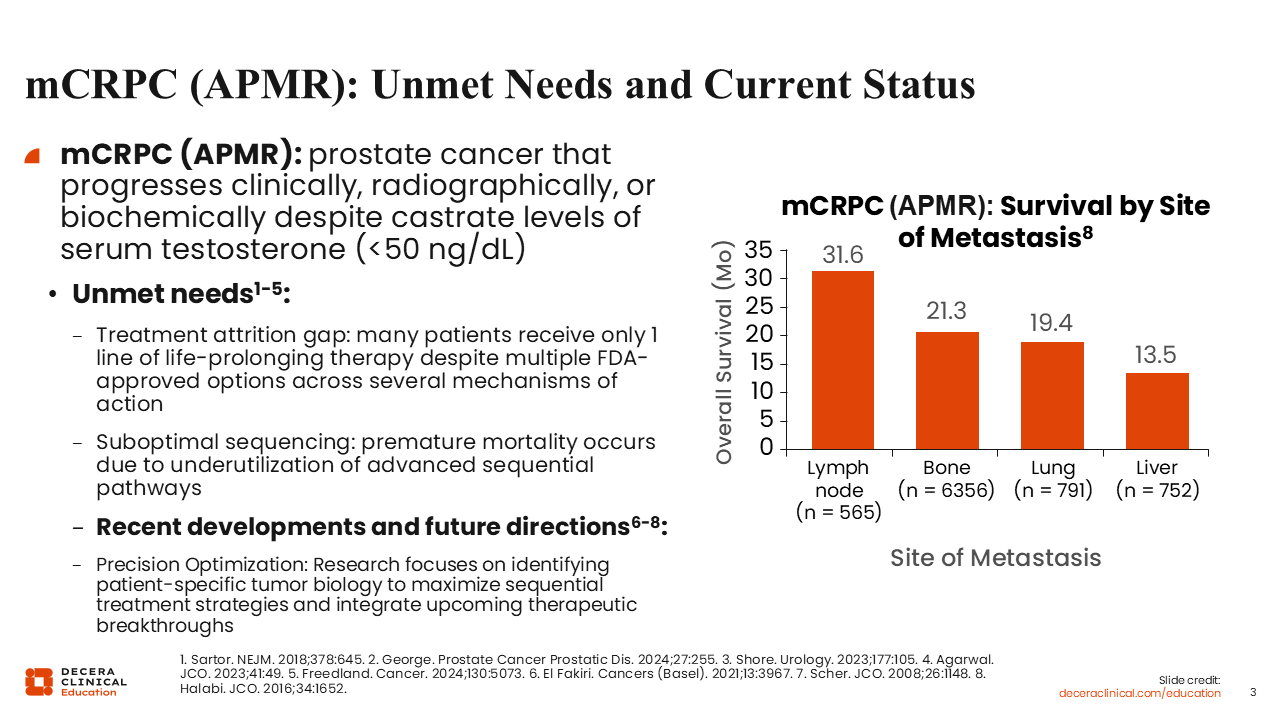
mCRPC (APMR): Current Status and Unmet Needs
The progress in prostate cancer treatment over the past 20 years has been extraordinary. We now have approximately 14 FDA-approved therapies representing 7 different mechanisms of action, and these advances have meaningfully improved survival for many patients. However, metastatic prostate cancer remains largely incurable, and many patients will ultimately die from their disease.
Overall survival (OS) varies by metastatic site, as shown in the bar graph. Outcomes are worse with visceral metastases, particularly liver metastases, whereas lymph node–only metastases are associated with a more favorable prognosis.4 A major unmet need is treatment attrition. In a real-world Medicare analysis, 22% of patients received no life-prolonging therapy after developing mCRPC, 78% received at least 1 line of life-prolonging therapy, 42% received at least 2 lines, and 20% received at least 3 lines.5
This gap is striking given the number of approved prostate cancer therapies available across multiple mechanisms of action. We, as healthcare professionals (HCPs), need to do better by discussing all appropriate treatment options with patients and ensuring they have the opportunity to receive evidence-based therapies when clinically appropriate.
Key challenges in this setting include accessibility, HCPs’ comfort with the new and expansive level of options available, ensuring that patients are able to participate in shared decision-making, and integrating a multidisciplinary team approach.
Optimizing Germline and Somatic Testing for mCRPC (APMR): A Significant Unmet Need
Germline and somatic testing can identify patients who may benefit from PARP inhibitors or pembrolizumab for microsatellite instability–high, mismatch-repair deficient, or tumor mutational burden–high tumors. As the field evolves, additional biomarkers, including PTEN by immunohistochemistry (IHC) in earlier metastatic disease, are becoming increasingly relevant for treatment selection.
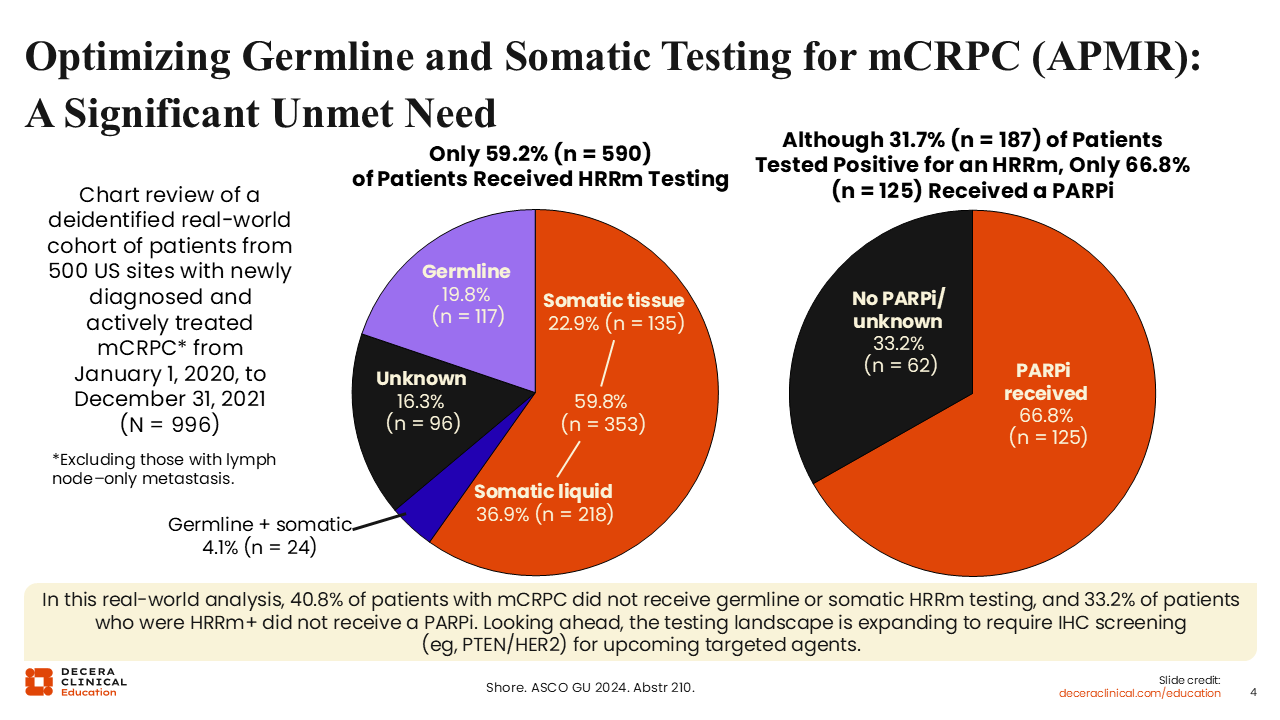
In a real-world chart review of 996 patients treated across more than 500 US sites, only 59.2% underwent HRR mutation testing. As a result, many patients may not have been identified as candidates for PARP inhibitor therapy.6
Among tested patients, only 19.8% received germline testing, despite its importance for identifying inherited cancer-predisposing mutations that may have implications for patients and family members. Most testing was somatic, including 36.9% by liquid biopsy and 22.9% by tumor tissue testing.6
Among the 187 patients found to have an HRR mutation, only 66.8% received a PARP inhibitor. In addition, 40.8% of patients did not undergo either germline or somatic HRR testing.6
As the treatment landscape evolves, comprehensive biomarker testing is becoming increasingly important. In addition to germline and somatic genomic testing, IHC for biomarkers such as PTEN and HER2 may help guide treatment selection. The question is no longer whether to test but rather how to ensure that appropriate testing is performed so patients can access the therapies most likely to benefit them.
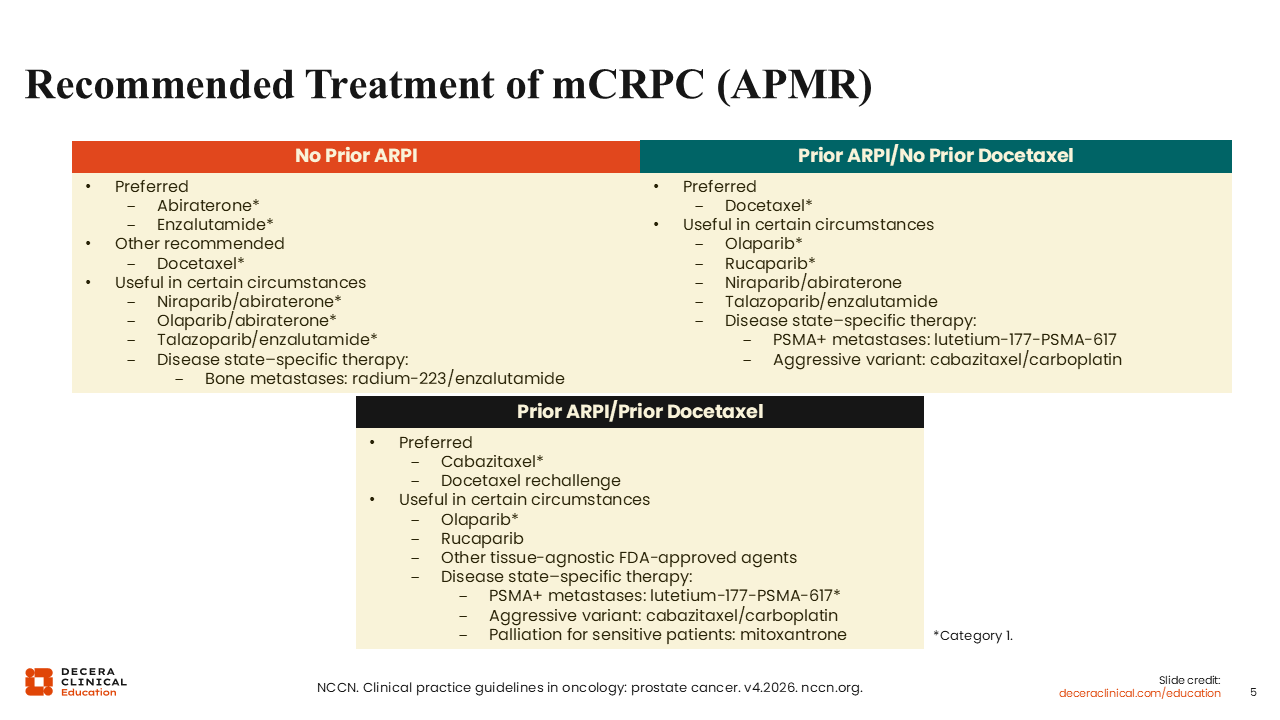
Recommended Treatment of mCRPC (APMR)
The NCCN guidelines for mCRPC recommend treatment based on prior therapies and patient-specific factors. An ARPI remains a preferred option for patients who have not previously received one. Other therapies may be appropriate in selected circumstances, including PARP inhibitors for patients with HRR mutations and radium-223 for those with bone-predominant disease.
For patients who have progressed on an ARPI and have not received chemotherapy, docetaxel is typically the first taxane used. Depending on disease characteristics and biomarker status, additional options may include PARP inhibitors or lutetium Lu 177 vipivotide tetraxetan for PSMA-positive disease when patients meet label and guideline criteria. In selected patients with aggressive variant or neuroendocrine features, such as low PSA levels and lytic bone metastases, a platinum-taxane combination, such as docetaxel plus carboplatin, may be considered.
After treatment with both an ARPI and docetaxel, cabazitaxel is the preferred second-line taxane. In some cases, docetaxel rechallenge may be considered. Additional options include biomarker-directed therapies, lutetium Lu 177 vipivotide tetraxetan for eligible PSMA-positive disease, and other tissue-agnostic FDA-approved agents when indicated. Mitoxantrone is now rarely used, as it provides palliative benefit but has not demonstrated an OS advantage.1
A key challenge in mCRPC is determining the next treatment strategy after progression on ARPIs, PARP inhibitors, taxanes, and radiopharmaceuticals. Addressing this unmet need remains an important focus of ongoing research.