Back
Back
CE / CME
Up to Date on Pneumococcal Disease and Prevention in Your Pediatric Patients
Pharmacists: 0.50 contact hour (0.05 CEUs)
Physicians: maximum of 0.50 AMA PRA Category 1 Credit™
Nurse Practitioners/Nurses: 0.50 Nursing contact hour
Released: July 13, 2026
Expiration: July 12, 2027

Activity
Brief History of Pneumococcal Vaccination in Children
The history of pneumococcal vaccination in children began with the development and licensure of the first pneumococcal polysaccharide vaccine in 1977. This vaccine was recommended primarily for adults and children ≥2 years of age with risk factors for severe disease.15
However, it soon became apparent that young children do not mount a robust immune response to polysaccharide vaccines. This is because protective immune responses to these vaccines are primarily antibody-based, and children under 2 years of age do not readily develop specific B cells and complement factors to effectively respond to purified polysaccharides.16
This observation led to research into the development of pneumococcal conjugate vaccines during the 1990s, which linked vaccine antigens to immunogenic carrier proteins. Ultimately, this culminated in the introduction of the 7-valent pneumococcal conjugate vaccine (PCV7) in 2000.15
Following the introduction of PCV7, invasive pneumococcal disease rates declined substantially in children. Reductions were also observed among adults, reflecting the indirect effects of pediatric vaccination. Within years, however, serotype replacement emerged, with increasing disease caused by non-vaccine serotypes.15
The 13-valent pneumococcal conjugate vaccine (PCV13) was introduced in 2010 and was associated with further reductions in pneumococcal disease, particularly invasive disease.17
However, serotype replacement continued, so broader-coverage vaccines were developed in response. The 15-valent pneumococcal conjugate vaccine (PCV15) became available for children in 2022, followed by the 20-valent pneumococcal conjugate vaccine (PCV20) in 2023. Most recently, PCV21 was approved for use in pediatrics in June of 2026: it is indicated for individuals 2-17 years old at high risk of pneumococcal disease.5,17,18
These newer conjugate vaccines provide protection against a greater number of pneumococcal serotypes and are intended to further reduce the burden of invasive pneumococcal disease. As higher rates of pneumococcal vaccination in children using vaccines with greater numbers of serotypes includes, adult pneumococcal invasive infections have declined because of lower nasal carriage and person-to-person transmission in communities.15
Pneumococcal Vaccine Options and Safety
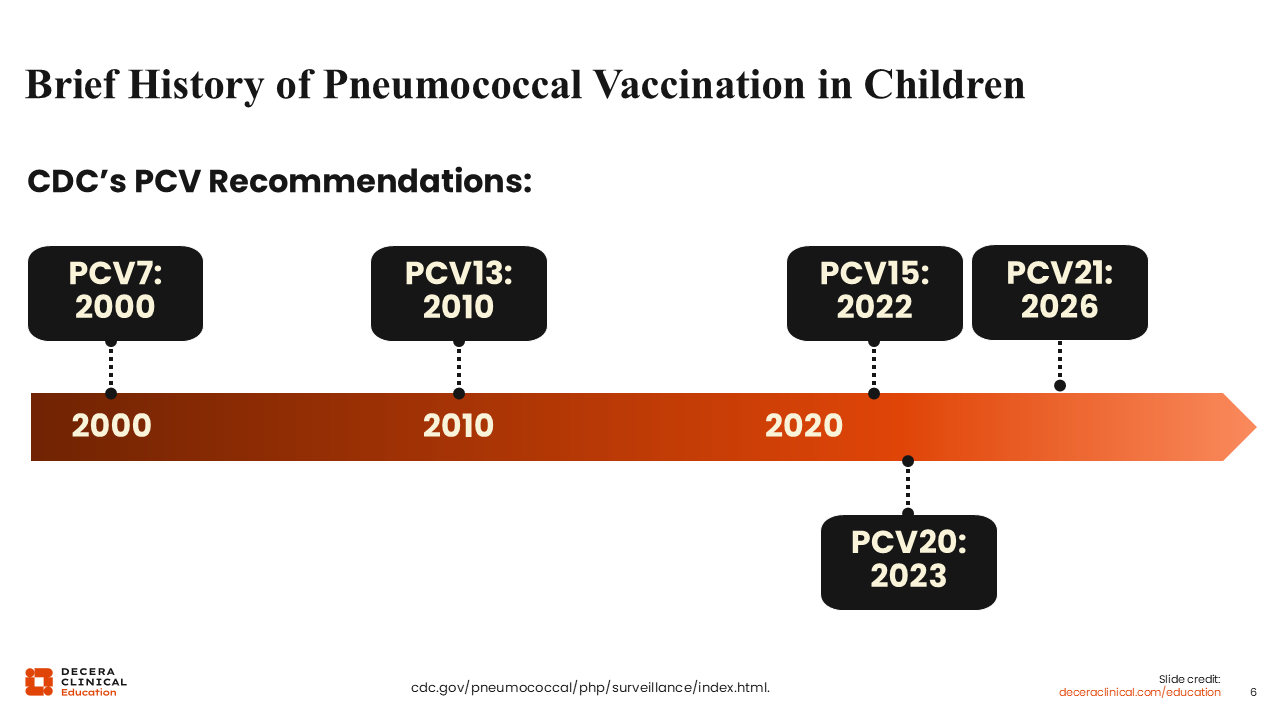
Currently available PCVs for children include, PCV15, PCV20, and PCV21, which was recently approved by the FDA for children at high risk. (It was approved so recently that CDC pediatric recommendations have not been updated yet to include it).
Recommendations vary depending on factors such as serotype prevalence in certain areas and risk factors.19
As noted earlier, young children do not mount as strong an immune response to polysaccharide vaccines alone. For this reason, the pneumococcal polysaccharide vaccine (PPSV23) is generally reserved for specific higher-risk situations in children who have previously received pneumococcal conjugate vaccines.20
Pneumococcal vaccines have a well-established safety profile, spanning decades of use. Common adverse effects include injection-site redness or soreness, low-grade fever, drowsiness, and decreased appetite. These reactions are generally mild and resolve within 1 to 2 days. Serious adverse effects are uncommon.19
Impact of Vaccination Campaigns After Introduction of PCV in 2000
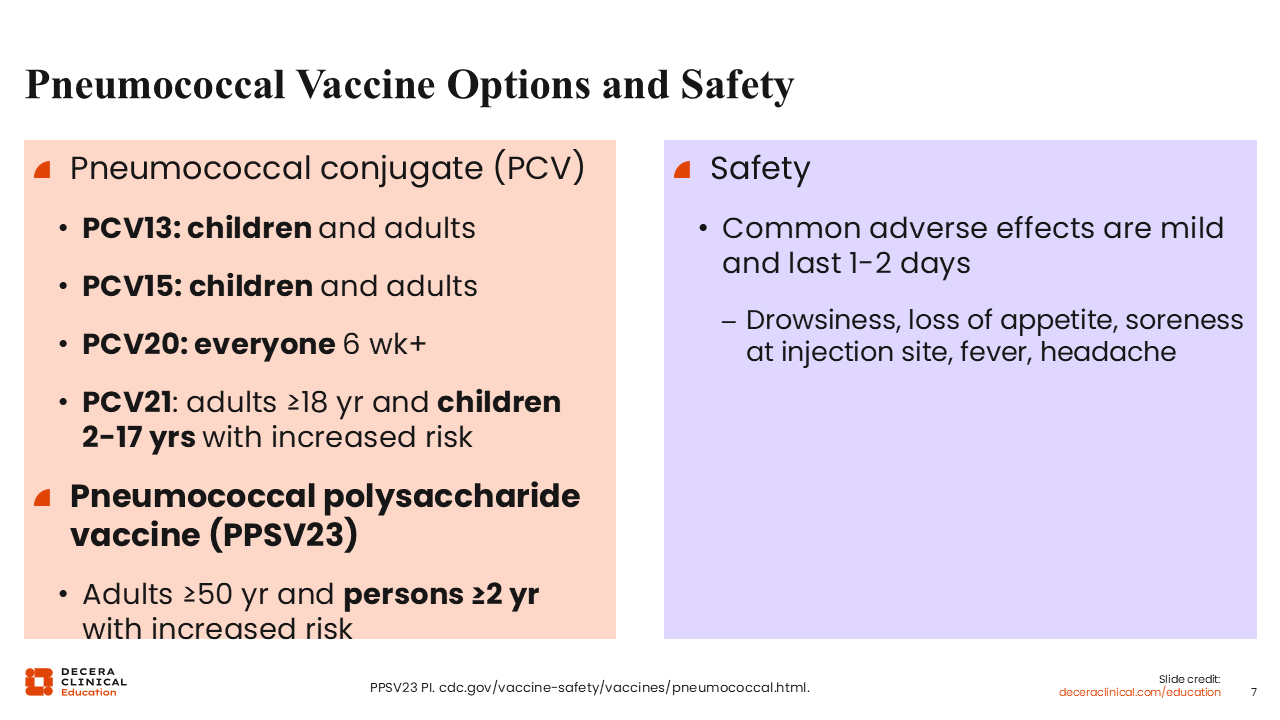
Over the past 25 to 30 years, the introduction of pneumococcal conjugate vaccines has led to a substantial reduction in invasive pneumococcal disease among children.8
Despite serotype replacement and periodic increases in disease caused by non-vaccine serotypes, the overall impact of vaccination has been profound. Following introduction of pneumococcal conjugate vaccines, invasive pneumococcal disease rates among children younger than 5 years declined by approximately 95%.8,15,17
Even greater reductions were observed for disease caused by serotypes included in PCV7 and PCV13. As use of PCV15, PCV20, and PCV21 continues, we expect to see additional reductions in disease burden associated with newly covered serotypes.8,15,17
Serotypes Targeted by Pneumococcal Vaccines
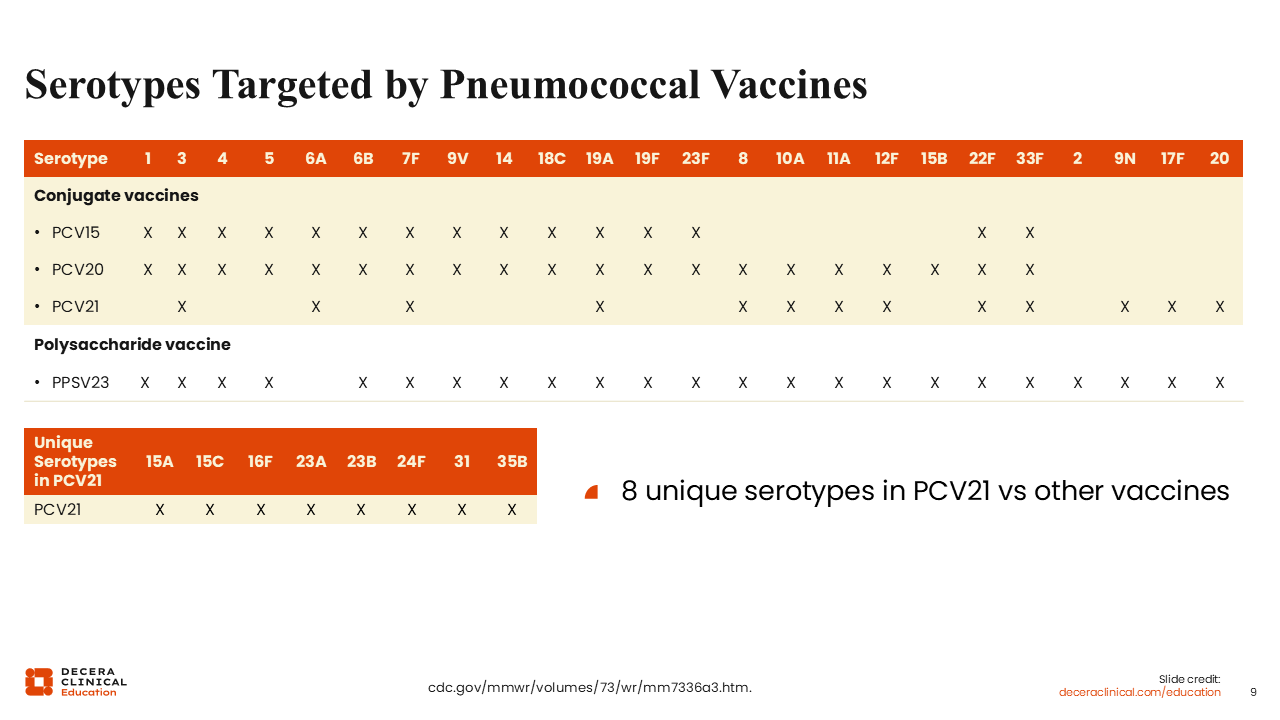
There is substantial overlap among the serotypes targeted by currently available pneumococcal vaccines.21
PCV15 provides coverage against 15 pneumococcal serotypes. PCV20 includes those serotypes as well as 5 additional serotypes currently associated with disease. PPSV23 covers many of the same serotypes and provides broader serotype coverage overall, though it is not generally recommended for young children, due to low immunogenicity in young children (<2 years) compared to conjugate vaccines.21
PCV21 targets a serotypes that cause pneumococcal of disease in adults and includes a number of serotypes not routinely targeted in pediatric vaccine formulations.21 PCV21 has recently been FDA approved for use in high risk children; recommendations for use of this vaccine in high-rish children should be available in the coming months.
Sometimes, different pneumococcal vaccines will be used in different areas of the world, as disease epidemiology varies geographically. The serotypes responsible for invasive pneumococcal disease are not identical across all populations, just as important differences exist between pediatric and adult disease patterns in the United States.22
CDC and AAP Pneumococcal Vaccine Recommendations: Children
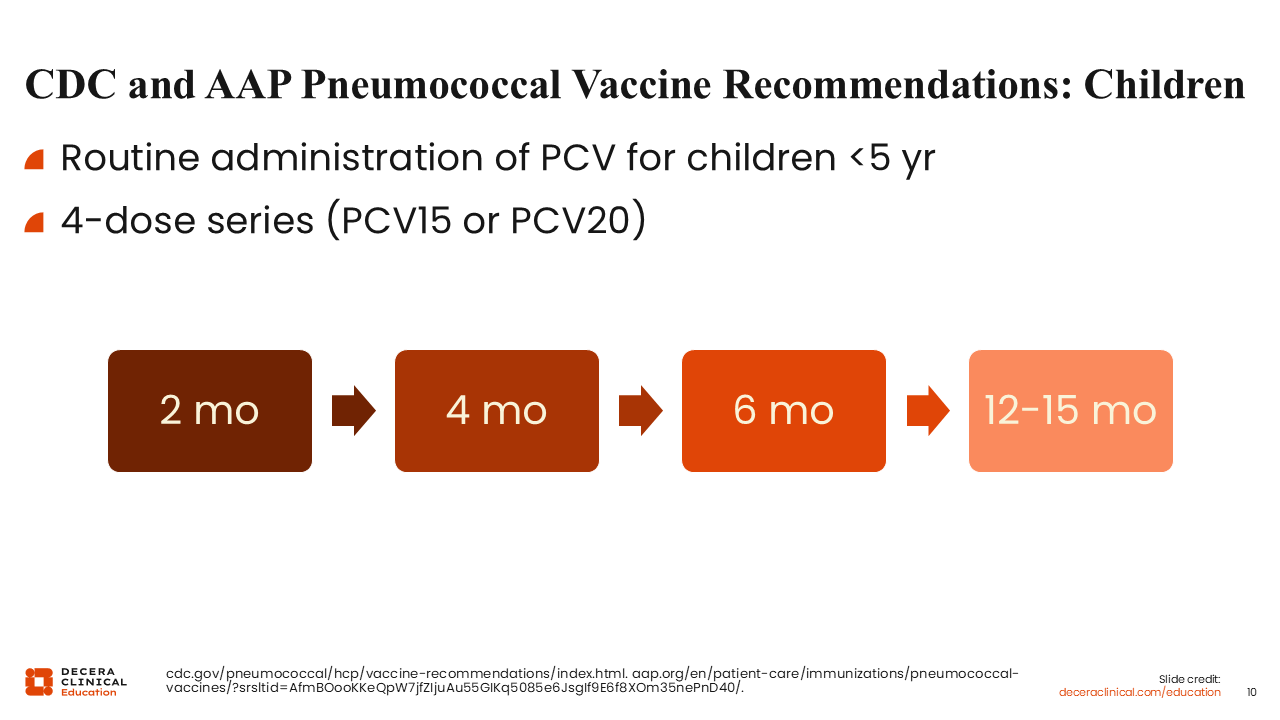
The Centers for Disease Control and Prevention (CDC) and the American Academy of Pediatrics (AAP) recommend routine pneumococcal vaccination beginning at 2 months of age for all children.23,24
The current recommended pediatric schedule consists of a four-dose series of PCV15 or PCV20, with the first dose at 2 months, followed by doses at 4 months, 6 months, and 12 to 15 months.23,24
However, some older children may have initiated their vaccination series with PCV13. In these cases, it is important to ensure that at least the final booster dose is either PCV15 or PCV20, to provide coverage against additional serotypes that have emerged since the original PCV13 series was initiated.23,24
Pneumococcal Vaccine Recommendations: Children With Risk Conditions
The recommendations differ slightly for children with risk conditions, including immunocompromising conditions, chronic heart, lung, liver, or kidney disease, and certain neurologic disorders.24,25
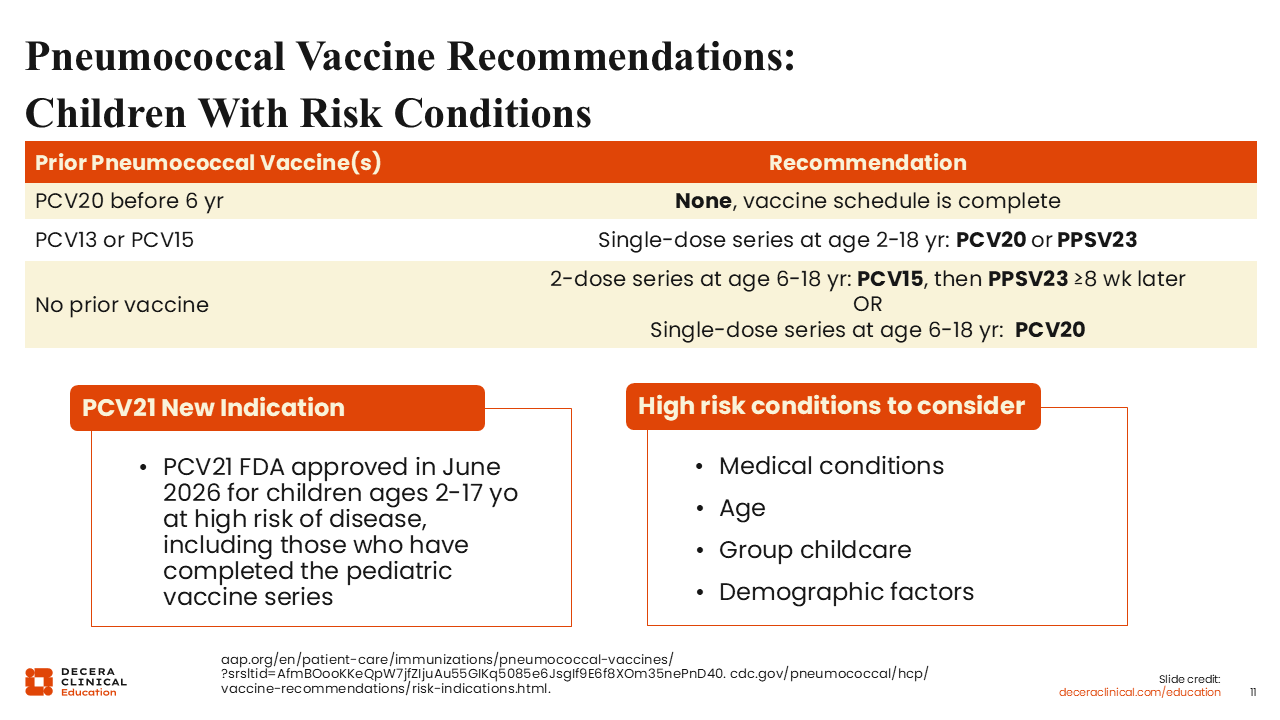
The first question to consider is whether they completed the routine 4-dose pneumococcal vaccination series. The goal is to ensure that this series is completed with at least one dose of PCV20.24,25
If a child with risk conditions has not completed the recommended series, vaccination should be completed first:
- If they had a prior pneumococcal vaccination that included PCV13 or PCV15, they should receive a single dose of either PCV20 or PPSV23 at age 2 to 18 years.24,25
- If they had no prior pneumococcal vaccination, they should receive either PCV15 followed by PPSV23 at least 8 weeks later or a single dose of PCV20 between 6 and 18 years of age.24,25
I generally prefer the conjugate vaccine option because available data demonstrate stronger immune responses with conjugate vaccines than with polysaccharide vaccines in children; however, either option is reasonable.24,25
How the PCV21 vaccine option will be incorporated into recommendations for high risk children is yet to be determined.
Catch-up Vaccination for Children with Incomplete PCV Status
Although incomplete pneumococcal vaccination is rare, it remains important to identify children who have not completed the recommended series.
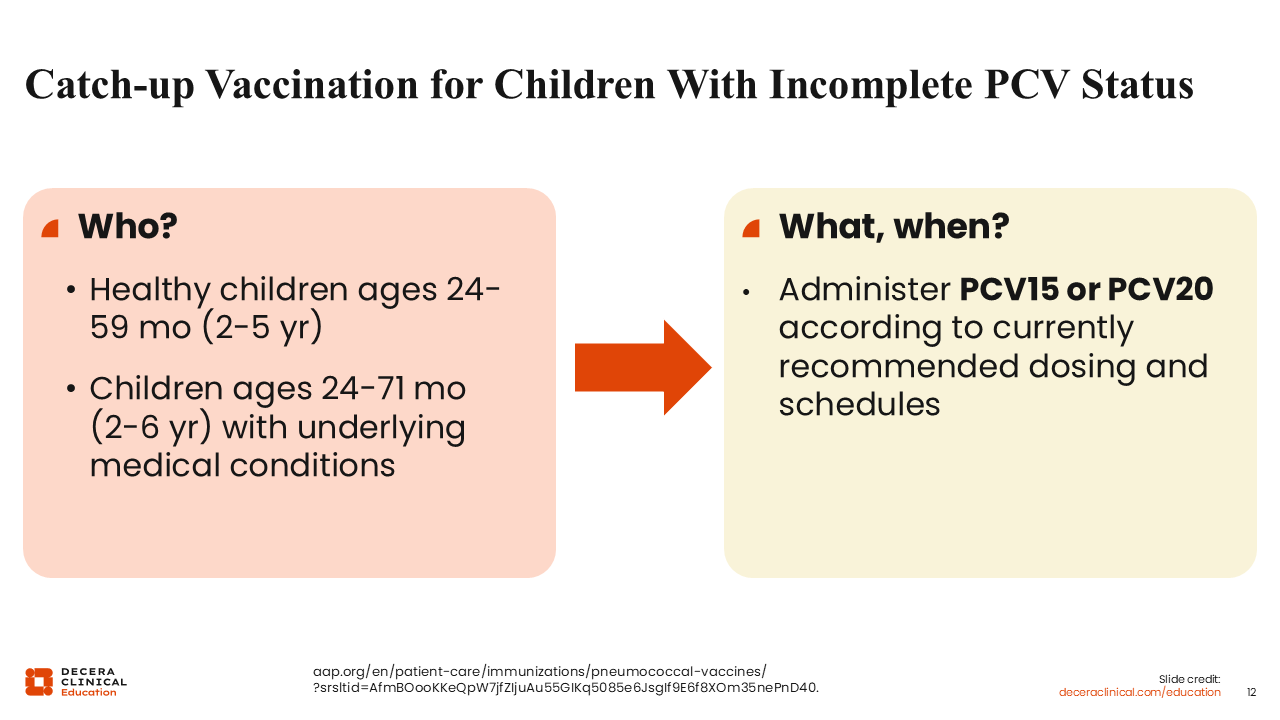
Healthy children aged 2 to 5 years (and children aged 2 to 6 years with underlying medical conditions) who have not completed their childhood pneumococcal vaccination series should receive PCV15 or PCV20 according to current recommended dosing and schedules to ensure adequate protection.24
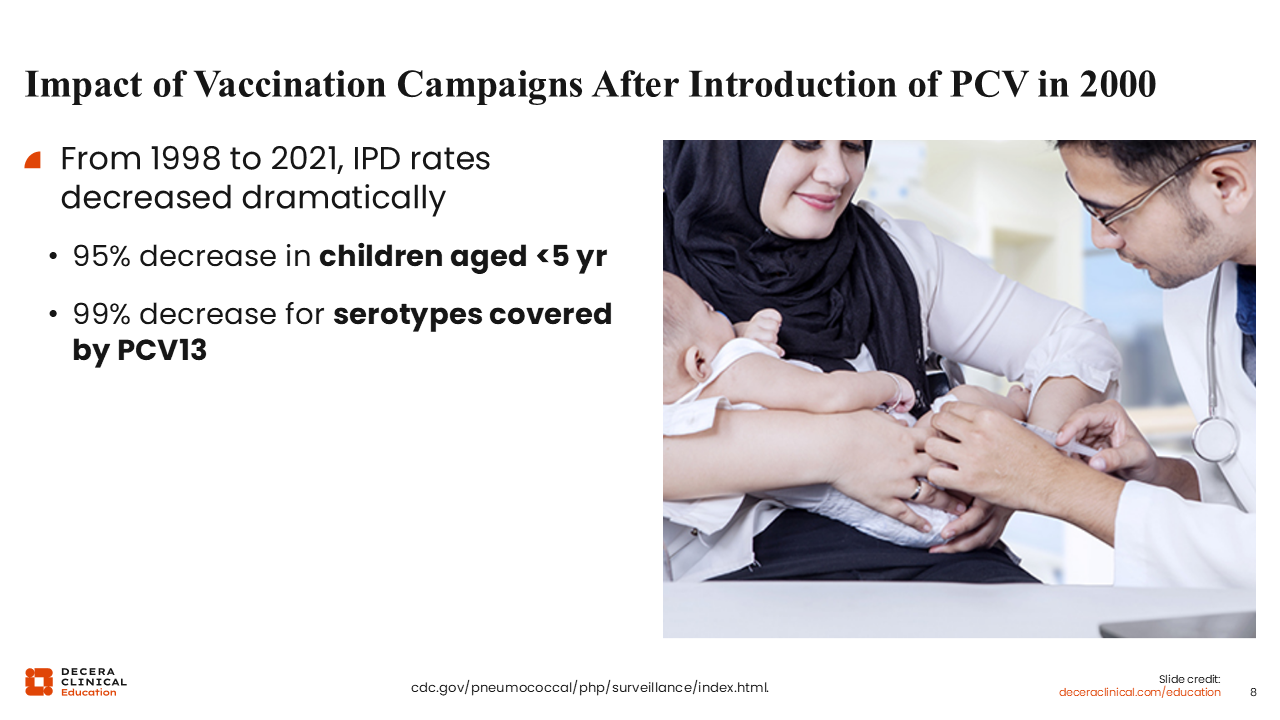
Pediatric PCVs in Phase III Development
A 25-valent pneumococcal conjugate vaccine is currently in development for pediatric populations. Other high-valency pneumococcal vaccines are also under investigation (NCT07629440, NCT06524414, NCT06975878, NCT06736041, NCT06824194).
Current development efforts are focused on expanding serotype coverage and addressing evolving patterns of pneumococcal disease.