Ask AI

TGCT Today: Understanding Diagnosis, Treatment, and Long-term Care

Tenosynovial giant cell tumor (TGCT) can present significant diagnostic and management challenges, particularly in patients with diffuse disease where symptoms, functional limitations, and risk of recurrence may substantially affect quality of life. In this podcast, expert faculty discuss the evolving TGCT treatment landscape, including the biologic rationale for targeting the CSF1/CSF1R pathway, the role of imaging and multidisciplinary care, patient-centered treatment goals, and practical considerations for integrating surgery and systemic therapies into individualized management strategies.
TGCT Today

This transcript was automatically generated from the audio recording and may contain inaccuracies, including errors or typographical mistakes.

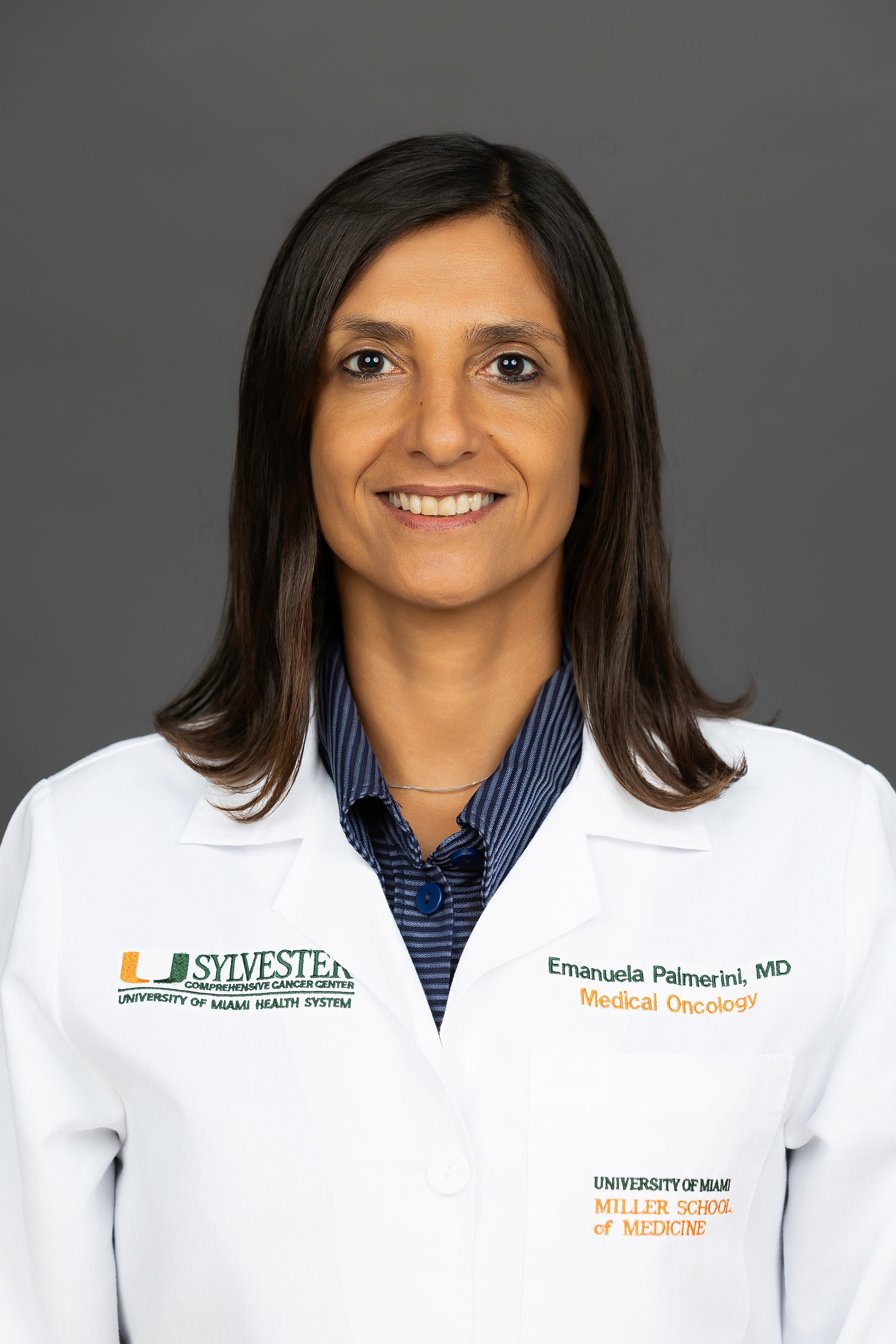
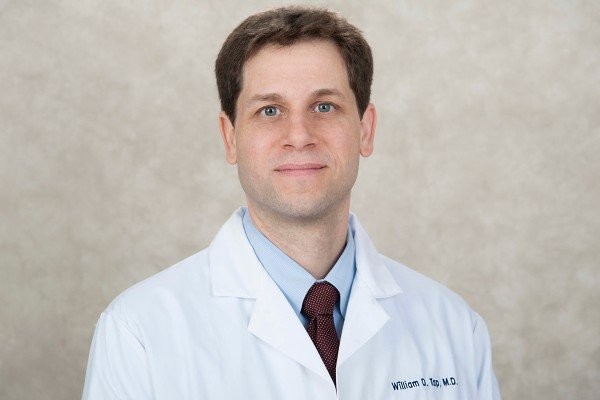
[00:00:00] Hello, and welcome to Decera Clinical Education Oncology Podcast. I'm your host, Amy Laboskie. Today's episode features expert faculty Dr. William Tapp of Memorial Sloan Kettering Cancer Center in New York, New York, and Dr. Emanuela Palmarini of Sylvester Comprehensive Cancer Center in Miami, Florida.

They will be discussing the evolving treatment landscape of tenosynovial giant cell tumor to include the biologic rationale for targeting the CSF1/CSF1R pathway, the role of imaging and multidisciplinary care, patient-centered treatment goals, and practical considerations for integrating surgery and systemic therapies into individualized management strategies.

This episode is part of a larger educational program titled Tenosynovial Giant Cell Tumor: Evolving Standards [00:01:00] in Diagnosis, Systemic Therapy, and Multidisciplinary Care. For more information on Dr. William Tapp and Dr. Emanuela Palmarini, along with a link to the larger educational program, please visit the show notes for this episode.

Now, let's get started and hear what the experts have to say about this important topic.

Dr. Palmarini, it's always a pleasure to talk to you today we'll be talking about tenosynovial giant cell tumor, or TGCT, and I thought it would be great if you could start us off by telling us a little bit about the disease and leading into then how we treat the disease.

Uh, thank you, Bill. It's a, it's a pleasure. TGCT stands for tenosynovial giant cell tumor former pigmented villonodular synovitis. The naming recapitulate the biologic, biology, which is unique. it is [00:02:00] translocation-driven, uh, tumor, but, um, it is composed by, stromal component, uh, tumor immune infiltrate and a tumoral cell.

The tumor cells, um, express, uh, GSF-1 receptor, but, um, the m- immune infiltrate is the cause of, uh, symptoms. our patient with, uh, TGCT come to us with usually pain, limited range of motion. For example, they cannot do the stairs if it is ne- the knee. And the reason is that there are a lot of immune infiltrate.

There are, very large macrophage or, uh, mono- mononuclear cells and, uh, of course the siderocyte which are the, the cellul- the, the, the cells that, uh, uh, gave, uh, their pathognomonic, uh, uh, feature under the microscope, which is [00:03:00] uh, deposit. The, the tumor cells.

The, majority of cells within a tumor are more inflammatory cells, but we do have what we call the neoplastic cells, right? Those are the cells that are causative of the tumor. And because of a rearrangement or a genetic translocation the tumor cells overexpress CSF1 and the inflammatory cells actually have that CSF1 receptor.

So they, they aggregate in a single joint and begin to cause this process in the tumor. When we originally had some of the initial discoveries there was thought to be maybe one translocation involving a collagen gene and the CSF1 gene that was causative of this. So putting almost a, a onco-promoter next to the CSF1, so it was overexpressed.

But now we know that there can be many different types of, of rearrangements, and as technology and science has gotten better, many people have been able to isolate the causative cell and study [00:04:00] it. So that's been really important as we think about designing treatments for this disease, because the CSF1, CSF1R axis has been amenable to, uh, targeting, not only with small molecule inhibitors, but also antibodies and, and what we call ligand traps.

So this is an area where there's robust research going on. But there's still a lot of nuances about this disease, and it's rare. We estimate that only, a few thousand people are diagnosed in the United States each year. Um, but there are different types of the disease, and maybe you can tell us a little bit about the different types of the disease yeah before these, GSF-1 uh, inhibitors, orthopedic surgeon or general surgeon were the main, uh, providers for patient with TGCT. Now we recognize that one form, the localized form, which is well circumscribed and, uh, [00:05:00] has a low recurrence li-rate, around, uh, ten percent might be treated by surgeon only.

While, the patient with diffuse TGCT, they tend to have, uh, infiltrative and destructive lesion. Again, going back to this, uh, knee lesion, which is the most frequent, they, they have, uh, the disease all around the joint. We used to call it a finger-like, uh, infiltrative, uh, disease.

So patient, uh, that are usually very active has to, consider repeated surgeries. That's, uh, that's why I think for diffuse TGCT, the opportunity to have a multidisciplinary discussion

I think the multidisciplinary care is essential, and, and we often speak that it's not only with the medical professionals. We need to talk to our orthopedic oncologists [00:06:00] and us as medical oncologists, but also our radiologists, our pathologists.

I think it's important to have physical therapy and supportive care. But integral to the multidisciplinary care is the patient themselves because this is a unique disease in that it can affect, uh, almost every joint in the body. What's interesting in people, it only affects one joint, so it's not something that we tend to see affecting multiple joint. And how it affects the joint can be very, very subjective and individualized from a person. So you can have two people with an identical tumor burden that has dramatically different symptoms.

And we, we always talk about this as a benign disease but a potential malignant behavior in, in the morbidity it causes for a person. It's not something that will spread or metastasize. It's not a cancer. It's not something that will shorten a person's life, but it can definitely alter their trajectory, especially in the diffuse type, because it can cause [00:07:00] tremendous symptoms.

You know, people can get chronic pain, uh, significant stiffness, edema. The inflammation can damage a joint and lead to the need for joint replacement. We've spent a lot of time creating patient-reported outcomes so we can better understand the disease.

But really, what's most important is trying to figure out how the disease is affecting an individual and what it is preventing, uh, them from doing, right? That's really important because when we think about treatments and our interventions, we also wanna make sure that we're helping. This disease can have a tremendous burden psychologically on patients.

It's, it's something that can affect their career trajectory, their school trajectory. So m-much of what we try to think about with people is how do we bring normalcy back to their lives by, by treating the joint. So that's a, a critical aspect. And, and so making sure the patient and the person with the disease is centric in the multidisciplinary care is important.

And, and maybe, um, you could talk a little bit about the patient's [00:08:00] journey, joint issues are very common, and so we often see delays in diagnosis. What's, what's been your experience with, uh, how patients actually end up in your office?

I think the patient journey change over time.

So, when we started the discussion on, on systemic treatment of, uh, patient with DGCT, uh, most of, uh, the referral were very late. So the patient, was, mainly managed by his, uh, general practitioner and then by the general orthopedic, and then maybe by a rheumatologist or physiotherapist, and then, uh, uh, some orthopedic oncologist, in the last years, the knowledge, uh, that other opportunity for treatment, uh, including all these, uh, are, uh, on the table.

The referral is, as early as, , that of, uh, the, the orthopedic surgeon because the orthopedic surgeon feel [00:09:00] that, uh, discussing with the patient all the, um, alternative, uh, to a surgery sometimes it's, because, uh, the patient are informed and want to know the different options. I think it's, uh, starting early to, to see the, the, the possibility. It's, uh, it's something that, um, is, uh, an opportunity for all involved in the, in, in the decision, do you think it's difficult to do a diagnosis of a tenosynovial giant cell tumor, or we have, good tools to, to get, uh, in the right direction, uh, for all of our cases?

It's, it's interesting because I do think it still takes a little time for patients to generally get to an orthopedics office where they may do diagnostic imaging. so there can be delays in diagnosis, and there's a big push in the orthopedic oncology community that when a general orthopedist sees the [00:10:00] patient to, actually refer to the orthopedic oncologist who is the true specialist in the disease.

But typically, an MRI is gonna be the cornerstone that we use for diagnosis of the disease. And, and the MRI is very sensitive in that you can identify the extent of a diffuse process within a particular joint, and that includes the intra and extra-articular spread, whether or not there's bone erosion, soft tissue involvement, edema.

It's also very important for distinguishing the localized or, or what you call the nodular disease versus the diffuse disease. And, and a good musculoskeletal radiologist can almost make the diagnosis of tenosynovial giant cell tumor on MRI. They, they can look for hemosiderin-driven signal patterns.

There can be low intermediate signals on T1 and T2 weighted with blooming artifact on gradient echo. So, there's very specific techniques that they can use with the MRI make the diagnosis. Again, why is this important? Because there's a [00:11:00] lot of different, uh, conditions, many of which are benign and some of which are malignant that can affect the joint.

So it can really help differentiate tenosynovial giant cell tumors. Throughout the process, as, as patients, uh, make their way into more specialized practices, I also think the scrutiny and the type of MRIs that are done also become more specific for the disease, which is, very important.

One of the things that we also talk about, and I'd love to get your opinion on, is whether or not when you have imaging that is specific for tenosynovial giant cell tumor, do you get tissue and/or biopsy to confirm the diagnosis? that is, um, a very good question. Usually we discuss, uh, at the, tumor board with our orthopedic surgeon, but, we got a biopsy in most of the case. And the reason is because, uh, there are for example, um, other synovitis [00:12:00] which are not, um, TGCT, and also that, uh, the differential diagnosis, um, even if the imaging on MRI is quite typical, dark in T1 and dark in T2, um, the, the differential diagnosis, it's really, wide.

I would, prefer have a-having a-the, um, his-histological confirmation, which is relatively easy.

And, uh, another important, um, feature around, getting the MRI and the, the imaging is, uh, the assessment, of the response to, to a treatment. what's your opinion around, uh, uh, RECIST, those, uh, response evaluation criteria which we use in solid tumor and, we have to, to use in all the clinical trial?

Do you think that, uh, they are accurate? They reflect, also the, uh, behavior of, this, benign [00:13:00] condition?

Yeah, I, I don't, you know. And I think, you know, we've struggled, um, over the years, um, in designing clinical trials because we often use RECIST, which is, uh, a really a unidimensional measurement of a tumor.

So it's good in solid tumors, but in a diffuse disease like tenosynovial giant cell tumor, I don't think it really captures the nuances of the disease. So there, there are better approaches. There are volumetric-based approaches. There's the tumor volume score that was developed. But, but I think this really lends into the question as to whether or not, , responses on imaging is, is that the goal of therapy, I think, um, to your point, it's really important to understand how the disease is affecting an individual. So we may be able to look at an MRI. Uh, we may be able to diagnose with an MRI and a biopsy. We may be able to see the extent of the disease. Um, we work with our orthopedic oncologist to understand the stability of the joint or if the disease , has potential to, to [00:14:00] compromise the joint, the neurovascular structures, uh, e- especially in some of the smaller joints like the hand and the wrist and the elbow.

Um, but really what it comes down to is how the disease is affecting an individual, is it swelling? Is it stiffness? Is it range of motion? Is it pain? If it is pain, what type of pain? Is it arthritic pain because of the process, or is it actually the pain from the, the tumor mass? So when we think about gauging responses, it, it comes down to what's most important for the individual, I often ask people why we're starting a drug and what we hope to gain, and it's, it's usually very practical. You know, I, I wanna be able to stand at a concert. I wanna be able to, get on my hands and knees to play with my child. And, and when you start a medicine, you can really begin to understand if you're helping people if, if you can start to achieve those goals.

So, we as oncologists put a lot of weight on how to measure tumors, but in tenosynovial giant cell tumor, I don't think that's the primary [00:15:00] focus. It's really how we're helping a person. I cannot agree more. My, my, the, the patient I think about when I think of the early days of clinical trial with the CS1R inhibitors were patient coming to me and telling me, "Oh, doctor, I can be back, uh, dancing tango or biking," which, uh, again, in this, uh, age group are whole activity that are, uh, very important.

But, I also had a, 35-year-old, girl which was, happy to be back in her heels.

We can move to rationale for targeting. We're talking about inhibitors, um, and we're talking about drugs, and we're talking about how drugs can help people.

Maybe you can delve a little bit and build on some of the biology that we spoke about earlier about what is the rationale for targeting CSF1 and CSF1R, which is the CSF1 receptor in diffuse tenosynovial [00:16:00] giant cell tumor?

Uh, so, uh, the the GSF-1 which link to this, uh, receptor. So there is a, uh, ecosystem which, um, uh, the tumor cell, uh, take part of, but, uh, it's, um, much more complex, uh, and, it's, uh, the reason of um, im- important symptoms. So which are, again, uh, dri- driven by tumor cells stromal cells and also the, the fluid.

Um, what, what is very specific of the disease when we open our MRI is the, those whitish, image, it's all the [00:17:00] effusion, uh, around, the mass. And this is, um, this is, uh, related to this, inflammatory ecosystem. Most of our patient before getting to their specific disease treatment undergo a lot of procedure inc- including arthrocentesis, uh, and, uh, and, sometimes surgery, but, um, the, um, it's, it's, uh, really impactful for their, their quality of life.

Sometimes this, uh, inflammation respond very well every case has its own, uh, journey, and, uh, I think it's really important to discuss, um, with our orth- orthopedic surgeons the goal of, uh, the, the treatment to take this inflammation, uh, back. And, uh Would you like to tell me more about, uh, the, the drug that, we are, currently, studying and, some of those are, are approved.

[00:18:00] It's interesting biology. You know, we talk in oncology about different types of inhibitors. Small molecule inhibitors that can actually get inside a cell and, and block receptor signaling.

The type of drugs that are actually approved now in tenosynovial giant cell tumor are these CSF1R inhibitors that can actually block the signaling of these receptors, uh, when CSF1 is bound. There's antibodies to the receptor that will prevent the binding of the ligand, uh, CSF1 being the ligand.

And then there's what we call ligand traps or, uh, which are like sponges that will suck up all of the CSF1. And by, by blocking this binding, this relationship, this intracellular signaling, what, what it does is it disrupts this ecosystem that you were talking about. And it will actually, uh, not only prevent the aggregation of the immune cells at the joint, but eventually the immune cells will die, and the inflammation will go away.

And, and pretty [00:19:00] rapidly, you could see tremendous improvement in some of the symptoms because you're relieving this inflammatory process, inflammatory conditions, you know, swollen legs, joints, that, that are very painful. And you realize once that inflammation goes away, you could feel better quickly.

I- In the beginning we used to think that the neoplastic clone... So that's the cell that has this broken, um, chromosomal rearrangement that secretes the CSF into the, the joint. Also depended on the presence of that CSF1 to feed itself, what we would, we would call an autocrine type of loop, where the CSF1 would actually feed the neoplastic cell and the cell would grow.

And now we question whether or not that's actually what's happening because we know with the drugs that are being developed, although they can be very helpful for people, they tend not to be curing the process, so, uh, we suspect that there are other mechanisms the, that, that [00:20:00] neoplastic cell uses survive.

And, and so it's interesting biology in trying to understand that because it may lend to other targets for this disease. But I, but I also think because these tumors consist predominantly of the inflammatory cells and not the neoplastic cells, we tend not to see resistance develop to the drugs as well, and that's something that's important to talk about.

So in cancer, where cancer can have billions and trillions of cells that are rapidly dividing, sometimes when you expose, uh, those tumors to a drug or a chemical, they can gain resistance to that drug because it would select for tumor cells within the mass that in- inherently are resistant or develop additional genetic mutations as they divide, that they become resistant to the drug.

But we don't see that in tenosynovial giant cell tumor because those neoplastic cells are probably not rapidly dividing and they're the minority of the cells. And that becomes important later when we talk [00:21:00] about potentially how to use drugs and the fact that we can treat patients, interrupt drugs, and re-challenge them with the drugs over time, and it's not something that will develop resistant to the drugs.

So it, it's been a revolution in how we treat patients and It is a nice component to our armamentarium for patients. It doesn't replace surgery. Uh, surgery is still an excellent treatment, but it's something that can be discussed in parallel, and that's really important.

I totally agree. I think it's, uh, phenomenal there in, uh, United States and now with vincetinib in Europe all patient with, uh, TGCT can be offered a GSF-1 inhibitor. The lack of resistance, uh, um, imply a, a tremendous also opportunity for drug management, the so-called drug holidays.

Means that the patient can [00:22:00] do one year of treatment, the disease shrunk, the symptoms goes away, and then the patient, uh, can be in the position to keep, uh, the, the treatment at the same dose, a lower dose, go for surgery, or for example, just to, to start a watchful waiting period. So the opportunity to have drug holidays and re-challenging the same treatment or the same class of treatment, I think, it's just, magnificent.

So you can, you can really use, uh, at b- best your time and the, the knowledge that the re-challenge is almost always, in my experience uh- Yeah ... going to, going to work. It's, uh, it, uh, it, uh, it's, it's really a game changer. So our patient, uh, really can decide without major concerns of, uh, res- secondary resistant what is, [00:23:00] uh, their goal for that specific time.

I agree. Can you maybe just align the, the audience as to the different drugs that we have available and, comparatively how we think about them?

We have, two major class of drug available now. Small molecule, pexidartinib and vincatinib approved. P-pim-pimicotinib . And, uh, emactuzumab, which, uh, is, uh, still, uh, under study, which is a monoclonal antibody. For activity, I think that, they are, um, acting very similarly.

We know that pimicotinib has, uh, better, uh, results in the clinical trials, but, um, as, uh, discussed, objective response rate is not always, uh, the most important endpoint.

So pain reduction and, uh, [00:24:00] symptoms improved, have been, um, observed the major question is for how long the treatment should be, um, continued.

And, um, the reason is because, uh, each one of these component, uh, different, has different side effects. What is, um, that you underscore and you discuss more with your patient, uh, to pick, uh, one compound or the other for treatment?

First and foremost, we have extensive conversations about whether or not we need to start a drug. And I think for a lot of people, the answer is we don't, and, and we can really spend a lot of time trying to treat them supportively and symptomatically and, can stay off using drugs for, for significant periods of time.

But it's good to know that they are there. And in the United States, we have, uh, the strong CSF1R inhibitors, which are pexidartinib and vimseltinib. We don't really compare across trials just because of the variability in [00:25:00] the patient populations and the trials.

But I think most of the drugs that we have, when they're strong CSF1R inhibitors, are, are gonna be pretty equivalent in how they can help an individual. So a lot of the, decisions regarding which drug we wanna start has to do with, um, just nuances patient preference, what are some of the side effects that we can see, how we monitor them.

And, and what's also interesting is, um, people tolerate drugs differently. And, and so a lot of it is about picking a drug and then seeing how they do with the drug. And, and we can adjust. You know, a lot of times we'll start at mid-level concentrations so the bodies can get adjusted to the medications.

It also allows to adjust up or down if you need them. For most people, we don't need quick responses. But what are some of the nuances that you were mentioning? Pexidartinib is a drug that, uh, you, you could take two pills twice a day every day. Um, vimseltinib is [00:26:00] one where you take twice a week, right?

So some people have preference regarding taking a pill twice a day every day versus twice a week. Pexidartinib, when the original studies were done, there was a very rare hepatic toxicity. It was a cholestatic hepatotoxicity, what we call a vanishing bile duct syndrome, and that can be very dangerous and, and deadly.

It, it's idiopathic. We don't know who or, or why they get it. And it's something that we don't know if we have great treatments for. So it's a very serious thing, but a rare thing. And it's something that enacted a risk evaluation mitigation strategy by the FDA. So, uh, providers, before they provide this drug, they have to sign up and, um, review material about the drug.

And patients, once they start the drug, have a, have to adhere to a rigorous paradigm of collecting blood where you, get blood work once a week for about nine weeks to make sure you don't see increases in the alkaline phosphatase or the bilirubin, [00:27:00] right? so it's a little daunting. It's, uh, sometimes a little scary to talk to patients about that, especially young people.

And although the risk is, is rare, it's still there, right? So it's, it's definitely something that has to happen in the informed, uh, consent regarding the drug.

The other thing about pexidartinib is that it does have a food effect, otherwise, it can affect the concentration of the drug.

Now, for people who are on lower doses of the drug, it may not matter as much, and they may find their correct dosing schedule and diet. But otherwise, that too can, uh, really affect someone's routine. Um, but overall, pexidartinib is safe it's a very good drug. Vimseltinib does not have that potential cholestatic hepatotoxicity as we, as we've seen with pexidartinib.

Um, but as a class with CSF1R inhibitors, I think some of the more prominent side effects that we can see are fatigue. Um, they're pills, so it can cause GI upset, um, although that's minor. You can see some subtle rashes. [00:28:00] Occasionally, you can see serious rashes, which is almost like a lupus-like rash.

They can affect the Kupffer cells in the liver, so you tend to see generalized liver inflammation, but that is predictable, modifiable, controllable, unlike the cholestatic hepatotoxicity. And I, and I think one of the more challenging side effects for people is that it can cause weight gain. So you can see periorbital edema facial edema.

Fluid retention in the body and weight gain. So that's something that you have to really pay close attention to because otherwise, people will, will gain, five, 10 pounds sometimes, and it's much more difficult to get off of. And then lastly, we can see hypertension with some of the medications.

The, the drugs, though, are not something that people need to be on consistently or always the higher doses. So there's a lot of, uh, leeway and self-agency in how to take the medication, so you can mitigate the symptoms but still get the effect of the drug, and I think that's a [00:29:00] critical aspect of it.

So a lot of it comes down to patient preference what they would like to try, what are some of the side effects, um, whether or not one drug is better tolerable for them. So I think, I think it's nice to have options. That's the main thing. We take all of these medications seriously. We monitor them closely.

For example, in vimseltinib, you still usually get blood work once a month for about three months, and then every three months. We, we don't know if these drugs can affect fertility or whether or not they're teratogenic. So, we're very careful, uh, with these medications, especially in younger women who may be thinking about having children, so sometimes delaying drugs, uh, if people are thinking about getting pregnant are really important. But those are the practical concerns of the, the medications.

When you start a medication, how long do you use it, and then what are the goals of therapy and, and how do you talk to people about [00:30:00] that?

I always discuss, as you mentioned, about, uh, the hepatotoxicity with pexidartinib and the edema with vinzelitinib, .. and also I would, take, - a laboratory and, uh, liver ultrasound to see if there are specific, uh, contraindication and, uh, patient, uh, preferences.

The decision is, dynamic even grade two, two edema periorbital every, every morning might be bothering. So at the beginning of, uh, uh, the treatment, most of the patient, uh, are more focused on, uh, symptoms improvement from the disease.

But then, um, along the line, the tolerability even to, mm, uh, lower grade toxicity in, in this benign condition, is really tricky. We discuss, uh, mm, every visit on the possibility to do drug holiday. So for some of the patient, we continue the treatment, uh, for [00:31:00] several years.

Radiological progression with TGCT of treatment is quite sharp. I mean, uh, I would say around, six to 12 months. Diffuse TGCT might-- uh, it's different from nodular TGCT, and, uh, there are some individual case that, uh, might have a, a longer positive effect.

But I am really eager to see the result with the monoclonal antibody, emactuzumab, because with that treatment, uh, the plan is to treat the patient, uh, just, uh, uh, five time with the endovenous administration. But then, uh, the The, the disease, uh, will be followed. So I'm, uh, I'm really, uh, looking into to, to see how the progression, uh, free survival, uh, would be in, uh, in order to understand, uh, if we can, uh, give our patient, uh, [00:32:00] symptomatic, uh, relief longer with, some of, uh, the newer agent, or we should, uh, just, find a better way to combine systemic treatment, uh, neoadjuvant, and then, residual tumor surgery.

But, um, all discussion are still, um, under scrutiny, and, uh, we will, uh, learn more from, future study.

I, I usually tell my patients that when I start treatment that we're probably gonna use it for about a year, and the reason being is we know that we see the majority of results within the first three months. More longitudinal studies can show that within six to nine months, you know, we can still see some improvement in some individuals, and then it begins to plateau.

And, and my experience is when we stop drug, um, especially in the smaller joints, we can see more durable responses. Sometimes in the larger joints, you can see recurrences but, they're definitely starting at a point that's much less than when they had the [00:33:00] original disease before treatment.

So you can often monitor those, uh, recurrences for long periods of time before they need intervention. So that kind of lends me into how often we image people. So when people are on treatment, I probably will see them every three months when it's more of a, a, a chronic use of the drug, and I'll get blood work and I'll, I'll just see how they're doing, see how their function is, uh, their symptoms are.

I'll, I'll probably get an MRI every six months, uh, just to look at the disease, but I, I tend to try not to overreact to those. And the same is true when I stop therapy. I usually will see them back every six months and get an MRI at that time. But like you said, you have to be careful because this isn't a disease that we wanna treat radiographically.

And definitely as oncologists, there is a tendency that if you get an MRI and you see a recurrence, your first thought is, "I have to do something." So it takes a lot of education, especially if the patient [00:34:00] is not symptomatic, to say, "Let's just continue to watch." So there is, there is some point to saying, you know, "Let's not continually do MRIs, but only get them if symptoms develop," and I, I think that's something I always tell my patients, "I'll get an MRI in six months but if symptoms develop, give me a call and we'll do something sooner." And, and over time, a lot of people will say, "Well, why don't you just make it a year and I'll call you if, um, you know, something's happening," which I think is very appropriate.

The take-home message for me is, is patients have a lot of leeway of how to use these medications. I think when we are treating someone, we as oncologists do like to have more routine care follow-up blood work in labs to make sure that our treatments are treating them well and not harming them. Radiographic imaging is important, but not really a hallmark of whether or not we would change anything with therapy.

I think that's more symptom driven. And, there's something to be said about more symptomatic assessments than just serial radiographic [00:35:00] imaging. But early on after stopping a drug, I still usually get the images every, every six months and then we move it out a little bit.

I also want to take, uh, uh, a minute to invite, uh, everybody in the audience to watch, uh, our modules. Uh, Those would, uh, guide through something, um, e- educational around TGCT diagnosis, treatment, and, uh, treatment side effects. Um, and, uh, I really want to thank you Bill, for being here, and, uh, uh, for everybody for, uh, their attention today. Thank you, Emanuela, and it was a pleasure to speak with you today.

Thank you, Dr. Tapp and Dr. Palmarini, and many thanks to you, our listeners, for joining us. As a reminder, to view the full program, Tenosinovial Giant Cell Tumor: Evolving Standards in Diagnosis, Systemic Therapy, [00:36:00] and Multidisciplinary Care, please click the link in the show notes, and be sure to check back regularly for more episodes on important oncology topics.