Ask AI
Countering Vaccine Hesitancy
Countering Vaccine Hesitancy Through Kindness

Released: April 24, 2026

Activity

Progress
1
Course Completed
Key Takeaways
  • Nurses and APPs have a unique opportunity to connect with parents and caregivers to build trust and support pediatric vaccination.
  • Websites can be useful tools for debunking vaccine misinformation, but the most effective approach is one-to-one conversation and grounding recommendations in personal storytelling.

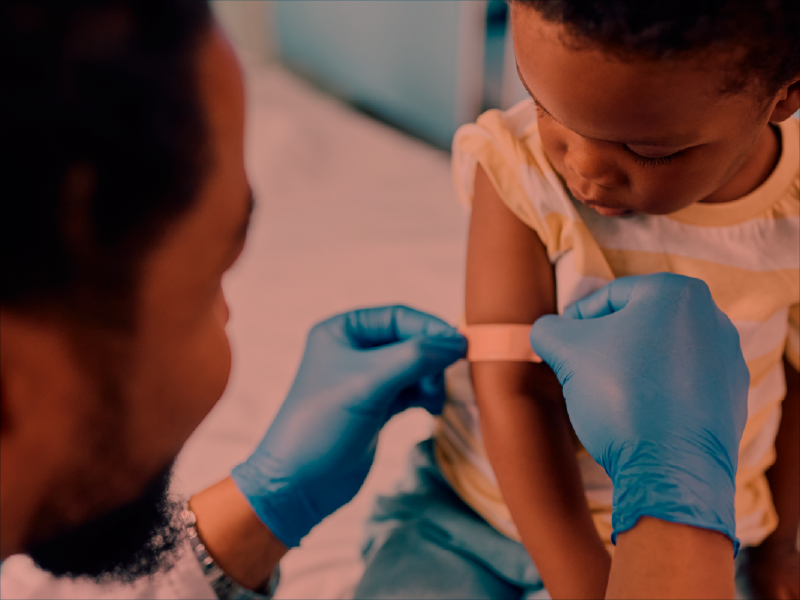
When considering vaccine uptake on the national level in the United States, the numbers actually look decent. However, when drilling down to specific communities, that is where the effects of vaccine hesitancy, distrust in healthcare, and misinformation have resulted in very low vaccination rates in certain areas. Here, I discuss how nurses and advanced practice providers (APPs) can have a key role in supporting pediatric vaccination.

Supporting Vaccine Uptake
As nurses and nurse practitioners, we have an opportunity and a responsibility to address vaccine hesitancy on an individual basis. I think we have to start with building trust, by listening to hesitant individuals and asking them about their specific concerns regarding vaccines. This is very time-consuming, so sometimes I have to make an appointment solely to discuss vaccines. There just is not enough time to cover everything during a regular appointment.

You might wonder if this is time well spent because vaccine-hesitant patients and caregivers are not likely to change their minds when presented with evidence contrary to their beliefs. But in my experience, I have never had anyone refuse to listen when I ask for permission to share information about vaccines. The key is to keep the conversation going. I find that if I can sit with someone and look at the same things that they are seeing, I can point out misinformation and address it more effectively.

I have had success with this method, but there also comes a point where I can see I will not convince the patient, and I just have to accept that. However, even with these patients who are adamantly against vaccination, I always ask them if I have permission to discuss vaccines the next time they come in. It is not a sprint; it is a marathon.

Using Storytelling to Build Trust
I have found that the most effective way to build trust is not by correcting people or simply spewing information at them. Rather, it is about storytelling. People do not really care about statistics. They want to hear whether you vaccinated your children, why you chose to do that, and what happened afterwards. Storytelling is so important because it is memorable and personal.

I talk about my children and my grandchildren. I explain that the longer it takes to vaccinate them, the longer they are at risk. I want to make sure that my child is protected. This is a good segue to discussing how skipping or delaying vaccination leaves the youngest and most vulnerable children at risk for preventable diseases. Then I explain how this also exposes grandparents, teachers, or other immunocompromised people to preventable disease.

I often mention that I have a family member who has cancer and that it scares the daylights out of me every time she gets on the New York City subway system because it is impossible to tell who is vaccinated and who is not. With these stories, I try to appeal to people’s sense of community.

Finding Tools for Countering Misinformation
Many healthcare professionals feel unsure about what strategies to use to debunk vaccine misinformation. Fortunately, there are lots of tools available.

When I encounter a parent or caregiver with specific questions about false claims they have heard or who wants to discuss misinformation, I offer to look at the website they got their information from, together. I show them that it is not their fault if they have been misled and that they have been sold a bill of goods by people who have a lot of money and who stand to make a lot more money by convincing them not to vaccinate their children. Sometimes, parents are very taken aback when I bring up the money aspect. They have no idea how much money is spent by the antivaccination movement. I then reassure them that on the other hand, I am not being endorsed by any drug companies. My only mission is to keep their child safe.

My favorite website for debunking vaccine misinformation is Voices for Vaccines. Another website that does a really good job of debunking vaccine misinformation is Vaccinate Your Family. Both of these websites are written specifically for laypeople, and they are not government supported. Furthermore, both of these organizations were started by people who had experience with negative outcomes from vaccine-preventable diseases and did not want them to happen to anyone else. Their objective is simply to educate the public. 

Although an important component of disproving misinformation is providing reliable sources of correct information, I find that takes second place to one-on-one interaction with patients and caregivers. This highlights a crucial gap that nurses and APPs can help fill. My pediatrician colleagues are often really tight for time, and they need nurses to spend time fostering trust when they cannot. That is what I have suggested to the physicians: Let’s work together to build a culture of immunization in your office, starting from the first person who encounters that parent or caregiver.

Navigating Contradictory Recommendations
The last thing I want to touch on is the competing recommendations from professional societies vs those from the Advisory Committee on Immunization Practices and CDC. I think this rift between professional societies and the CDC is tragic, but I am hoping it is not permanent. What gives me hope right now is how professional organizations have stepped in and united to speak with one voice. Personally, I recommend adhering to the American Academy of Pediatrics’ vaccine schedule. Most of my colleagues recommend that as well. To me, the consensus on that demonstrates that my colleagues are looking at the science, not who is putting it out, but rather what is being put out.

Ultimately, we all have the same goal of keeping our children healthy. Many people working in these societies have seen what happens when we do not vaccinate. When I need a reminder of what we are fighting for, I go out east on Long Island to see historic church burying grounds. The graveyards are full of headstones with children's names on them, most of them younger than 5 years of age, inscribed with diseases like measles, whooping cough, and brain fever. I am not ready to return to that, and I, along with my colleagues, will do whatever we have to prevent returning to that. I think that is the underlying reason why the professional societies have come together to support pediatric vaccination. We know what works. We know this protects children.

Your Thoughts
How do parents, caregivers, or patients usually react when you offer to discuss their vaccine concerns with them? How effective do you find this approach? Leave a comment to join the discussion.