Ask AI
CDH6 ADCs Ovarian Cancer
Expert Insight Into CDH6-Targeting Antibody–Drug Conjugates for Ovarian Cancer

Released: February 03, 2026

Activity

Progress
1
Course Completed
Key Takeaways
  • CDH6 is a promising target for ADCs in ovarian cancer and renal cell carcinoma.
  • Raludotatug deruxtecan and CUSP06 have shown promising efficacy in phase I and phase II trials in ovarian cancer with further studies ongoing.
  • Preliminary data suggest raludotatug deruxtecan activity across low to high expression levels of CDH6.

CDH6-targeting antibody–drug conjugates (ADCs) are an emerging class of agents for the treatment of ovarian cancer with promising clinical trial results. In this commentary, Isabelle Ray-Coquard, MD, PhD, Prof, and Debra L. Richardson, MD, discuss the latest evidence for these therapies and how they may fit into the treatment paradigm. 

Cadherin-6 

Debra L. Richardson, MD:
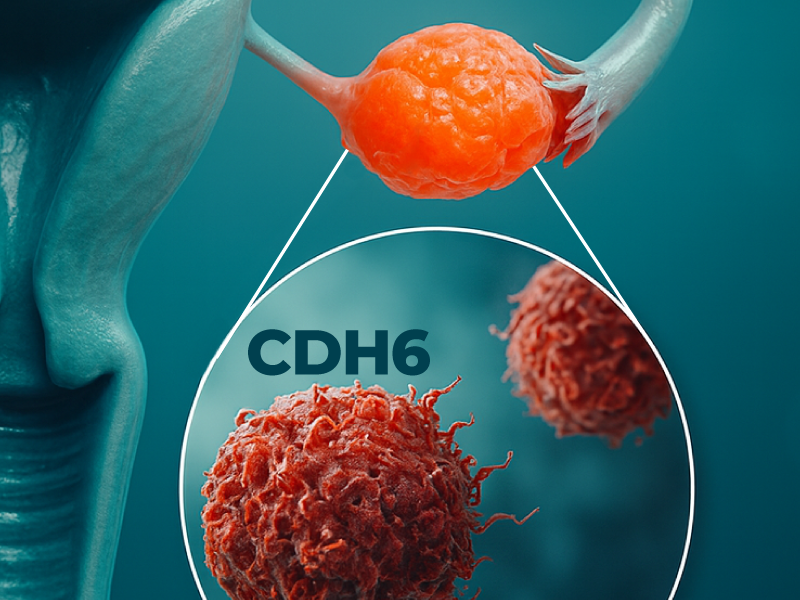
Cadherin-6 (CDH6) is a protein with low levels of expression on many healthy, normal tissues but is overexpressed in several solid tumors, including ovarian cancer and renal cell carcinoma (RCC), among others. The role of this protein is unclear, but it appears to mediate cancer progression and is associated with poorer survival outcomes in ovarian and renal cancer. Recent data show that up to 94% of epithelial ovarian cancer tumors express CDH6, so this protein offers a great opportunity to develop targeted therapies. The first CDH6-targeting ADC with a maytansine payload showed early promise but was ultimately discontinued because of unexplained neurologic adverse events. However, more recent agents have shown more encouraging results regarding both efficacy and safety.

Raludotatug Deruxtecan 

Debra L. Richardson, MD:
The CDH6-targed agent with the most evidence in ovarian cancer is raludotatug deruxtecan (R-DXd), an ADC with a deruxtecan payload, a drug‑to‑antibody ratio of 8, and bystander antitumor effects. The first-in-human phase I trial of this agent was a dose escalation and expansion study in patients with advanced or metastatic ovarian cancer with previous taxane and platinum-based chemotherapy treatment. Of importance, the 156 enrolled patients were not preselected based on CDH6 tumor expression level. The patient population was also primarily platinum-resistant and heavily pretreated. Across the expanded dose levels (4.8, 5.6, 6.4, and 8.0 mg/kg; n = 50), the confirmed overall response rate (ORR) was 46% (1 complete response [CR] and 22 partial responses [PRs]) with an impressive disease control rate (DCR) of 98%. A small subgroup of 18 platinum-sensitive patients experienced an ORR of 72% (all PRs), which is comparable to outcomes with doublet platinum-based chemotherapy.

R-DXd did cause some myelosuppression, such as decreased neutrophil and platelet count, which was expected due to its TOPO-I payload. Of note, only 15% of patients discontinued treatment because of treatment-related adverse events and 25% required dose reduction. The worst cases of interstitial lung disease, an adverse event associated with ADCs, occurred in the highest dose cohort (8.0 mg/kg), which was discontinued. Overall, these phase I results were very promising, and the intermediate doses have continued to be studied.

Isabelle Ray-Coquard, MD, PhD, Prof:
Building on the evidence for R-DXd, I had the opportunity to present the phase II results of the phase II/III REJOICE-Ovarian01 study at ESMO 2025. This study tested 3 doses of R-DXd (4.8, 5.6, and 6.4 mg/kg) for platinum-resistant, high-grade serous or endometrioid ovarian cancer after 1-3 prior lines of treatment, including bevacizumab. Again, patients were not selected based on tumor CDH6 expression. The activity of R-DXd was impressive, with the vast majority of the 107 treated patients experiencing tumor shrinkage, an ORR across all the doses of 51% (3 CRs and 51 PRs), and a DCR of 78%. Of interest, tumor responses were observed across a range of baseline CDH6 expression levels from the lowest to the highest positivity, which is important to keep in mind as we continue to study R-DXd. The safety profile was consistent with the phase I data and considered manageable. Overall, these efficacy and safety results are very promising and encourage us to consider using R-DXd in earlier lines of treatment. The phase III part of REJOICE-Ovarian01 is anticipated to begin enrollment in early 2026 and will assess the efficacy and safety of R-DXd 5.6 mg/kg compared with investigator’s choice of chemotherapy in approximately 450 patients (NCT06161025).

Another in-progress trial of R-DXd is the phase II REJOICE‑PanTumor01 study, which is investigating whether R-DXd 5.6 mg/kg can be used for disease beyond high‑grade serous ovarian cancer including other gynecologic cancers (eg, endometrial cancer and cervical cancer), urothelial cancer, and RCC. We hope to see preliminary results in 2026. The last study of R-DXd that I will mention is the phase I/II REJOICE-Ovarian02 trial investigating combinations of R‑DXd with carboplatin or paclitaxel in platinum-sensitive ovarian cancer and bevacizumab in platinum-resistant ovarian cancer.

CUSP06

Debra L. Richardson, MD:
CUSP06 is another CDH6-targeted ADC in development with an exatecan payload. Like R-DXd, it has a drug‑to‑antibody ratio of 8 and bystander antitumor effects. The dose-escalation phase of the human phase Ia/Ib study of CUSP06 is evaluating a range of doses from 1.6 to 5.6 mg/kg for the treatment of advanced ovarian cancer and RCC. Other solid tumors that were prescreened for CDH6 expression were also eligible. Two cohorts of CUSP06 plus granulocyte colony-stimulating factor (G-CSF) were also added to prevent myelosuppression observed in other cohorts.

Among 37 patients in the phase Ia portion of the study, 81% had ovarian cancer that was primarily platinum resistant and heavily pretreated, similar to the phase I R-DXd trial population. In addition, 23% of patients previously received mirvetuximab soravtansine. ORR was 36%, consisting of all PRs, and the clinical benefit rate of 92% was very high. Of interest, the G-CSF cohorts had a 50% PR rate and clinical benefit rate of 100%. The most common adverse effects were anemia, fatigue, thrombocytopenia, and nausea. Only 5.4% of patients had a treatment‑related serious adverse event, which is fairly low; 8.1% discontinued treatment; 32.4% required a dose delay because of toxicity; and 24.3% required a dose reduction. As expected, cohorts treated with G-CSF had lower risk of grade ≥3 neutropenia than the overall study population. Given some promising efficacy and safety in these initial results, it will be interesting to see how CUSP06 performs at the recommended phase II dose.

Other CDH6-Targeting ADCs in Development

Debra L. Richardson, MD:
SIM0505 uses a camptothecin-derived TOPO-I inhibitor and is in an actively recruiting phase I study for platinum-resistant ovarian cancer, RCC, and CDH6-positive non-small-cell lung cancer (NCT06792552). Another phase I study for the ADC HS-20124 is recruiting patients with advanced solid tumors that have ineffective, unavailable, intolerable, or nonexistent standard treatment (NCT06763159).

Fitting CDH6-Targeting ADCs Into the Treatment Paradigm

Isabelle Ray-Coquard, MD, PhD, Prof:
The data for CDH6-targeted ADCs are promising, but we will need to investigate where they should be placed in treatment sequencing and whether we need to select patients based on biomarker expression. For instance, the REJOICE-Ovarian01 study showed tumor responses to R-DXd across CDH6 expression levels. However, expression levels may affect other outcomes. We also need to optimize benefit and mitigate toxicity, for instance preventing nausea and vomiting and anticipating and managing interstitial lung disease with R-DXd, to avoid treatment discontinuation.

Debra L. Richardson, MD:
I think the field of ovarian cancer is exciting but also challenging at the moment because we have a number of new drugs in development, including these CDH6-targeted ADCs, and many unanswered questions. For example, how many distinct ADCs can a patient receive? I anticipate that patients with ovarian cancer will likely be treated with up to 2 different ADCs, and they may require different antigen targets or different payloads to optimize efficacy, but we will have to see what the trials show. Regarding treatment combinations, I also think it will be difficult to combine ADCs with a TOPO-I payload with carboplatin because of their overlapping toxicity of myelosuppression. 

Although I do not envision these CDH6-targeted ADCs in the frontline treatment for ovarian cancer, we may see them used as maintenance therapy or fairly early in the treatment of both the platinum‑resistant or platinum‑ineligible patient populations with ovarian cancer.

Your Thoughts
How often do you discuss clinical trials with your patients with ovarian cancer? What barriers do you foresee in integrating CDH6-targeted ADCs into clinical practice? Ask the experts your questions about these CDH6-targeted therapies and how they could affect care for patients with ovarian cancer.

Poll

1.

How often do you discuss clinical trials of investigational agents, such as CDH6-targeted therapies, with your patients diagnosed with ovarian cancer?

Submit