Ask AI

Activity

Progress
1
Course Completed
Key Takeaways
  • AI is now a critical component of cardiology care that enhances cardiac imaging analysis, patient risk stratification, and clinical decision support for healthcare professionals.
  • To be effective, AI models should support healthcare professionals, not replace or overburden them.
  • Using AI effectively in cardiology practice is an ongoing initiative that requires continuous monitoring for data drift and bias, while ensuring patient care is not adversely impacted. 

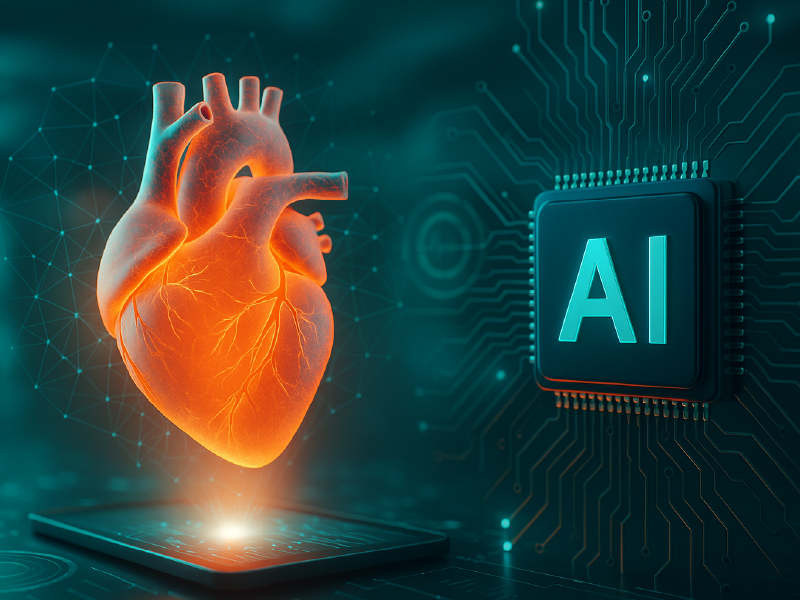
Artificial intelligence (AI) is now an inseparable component of cardiology practice—from imaging analysis to predictive models for heart failure, arrhythmias, and structural disease. Yet, as discussed by Evangelos K. Oikonomou, MD, DPhil; Francisco Lopez-Jimenez, MD, MSc, MBA; Pierre Elias, MD; Sammy Elmariah, MD, MPH; and Louise Sun, MD, SM, FRCPC, FAHA, in the recent “Heart-ificial Intelligence” Think Tank, the challenge has shifted from developing effective AI models to deploying them responsibly in real-world clinical workflows. The discussion underscored that an AI model’s accuracy alone is insufficient for healthcare adoption. To truly enhance patient outcomes, AI must integrate smoothly into existing workflows, support clinical judgment rather than replace it, and maintain transparency across all users—healthcare professionals (HCPs), health systems, and patients.

Key Insights for AI Application in Cardiology
Before implementation, every AI model must undergo robust internal and external validation. As Dr Elias noted, models must perform well with controlled datasets and retain reliability across diverse populations and health systems. He cautioned that AI trained in 1 environment will rarely generalize perfectly to another. Continuous monitoring for data drift and model degradation is crucial, and local calibration like tracking positive predictive values and false-alert rates ensures ongoing trust and accuracy.

Next, workflow integration determines adoption. AI outputs must appear at the point of care, not buried in external dashboards. Dr Sun emphasized that embedding predictive AI models within the electronic health record (EHR) allows HCPs to act immediately. Dr Elmariah described using automated echocardiography-based alerts within the EHR for possible aortic stenosis, allowing HCPs to accept or decline referral with 1 click; if the alert is ignored, the system automatically triggers a valve-team referral after 2 weeks, creating a human-in-the-loop safety net to prevent patients from being missed.

Finally, AI should simplify, not complicate, HCP workloads. But Dr Lopez-Jimenez warned that utilizing multiple, parallel AI models can increase HCPs’ administrative workload and lead to alert fatigue. The Think Tank panel advocated for consolidated, context-aware AI with tools that surface only the most clinically relevant information in the right setting and with clear actionability.

Ethical Integration of AI in Healthcare
Although developing and integrating AI poses its own set of practical challenges, ethics and human oversight are essential. For example, as Dr Elias emphasized, AI should not operate autonomously in clinical decision-making; rather, it should serve as a second opinion. Dr Sun’s observations on bias in generative AI—certain outputs stereotyped cardiologists by gender and ethnicity—highlight that bias in data begets bias in care. Ensuring diversity in datasets that represent the targeted patient population and conducting regular audits are ethical imperatives necessary for employing AI in any aspect of healthcare.

Furthermore, patients want reassurance that AI models are accurate, explainable, and supervised by their HCP. A brief conversation that explains how the AI assists with clinical judgment can build trust between patients and HCPs. Healthcare institutions also should provide patient-friendly summaries that describe how their AI models support care, which can further help demystify the technology used by HCPs.

Integrating AI into cardiology practice is not a 1-time deployment but a continuous learning process. AI models should augment HCPs by identifying patterns that would otherwise be missed and linking multimodal data (eg, ECG, imaging, and EHR) into trajectories to improve precision and patient-centered care.

The “Heart-ificial Intelligence” Think Tank reaffirmed that the path to meaningful AI integration in cardiology operates through humans, not the technology. In addition, best practices are now emerging. These include strategies for rigorous validation, seamless EHR integration, ethical safeguards, HCP and patient education, and streamlined workflows. Ultimately, the goal is to augment, not automate, care by reducing cognitive and administrative burden on HCPs and enhancing diagnostic precision and patient trust.

Your Thoughts
Do you welcome the use of AI to support your cardiology practice? You can get involved in the discussion by answering the poll question and posting a comment below.

Poll

1.

Do you welcome the use of AI to support your cardiology practice?

Submit